
Reviewed · TEMPLE OF ARTEMIS TOURS
Kusadasi: Ephesus and Artemis Skip-the-line Small Group Tour
Ephesus is the kind of place where you can feel centuries layered on top of each other, and this half-day tour is interesting because it’s built for limited cruise time. I like the small-group size (max 16) and I like the skip-the-line setup, so you spend more time looking at the marble streets and less time stuck in crowds.
I’d flag one consideration up front: you’ll walk about 1 mile (1.5 km) with some steps, so if your legs tire easily, you’ll want to plan carefully. It’s not a couch-to-ruins situation.
The payoff is practical and very seeable. You start with a pickup at Kusadasi Cruise Terminal (or select Kusadasi hotels), then head roughly 20 minutes into the ancient city while your licensed English guide helps connect the dots. Guides such as Yavuz, Emma, Nilgun, and Selda are repeatedly praised for clear explanations without turning it into a lecture, plus a smooth, safe ride.
Key highlights to look for
- Small group, up to 16 people: easier listening, more breathing room for photos
- Skip-the-line access for Ephesus: you pay for time saved, especially on cruise days
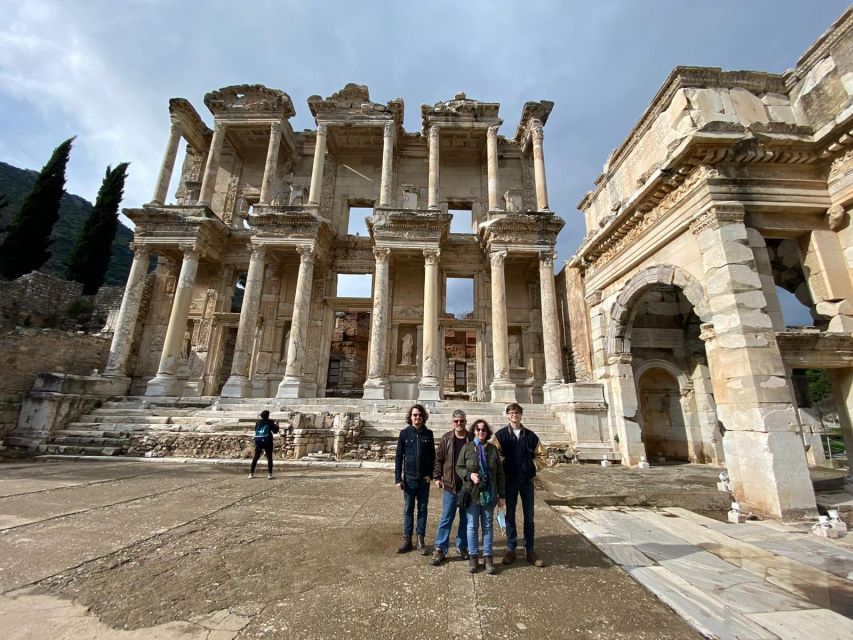
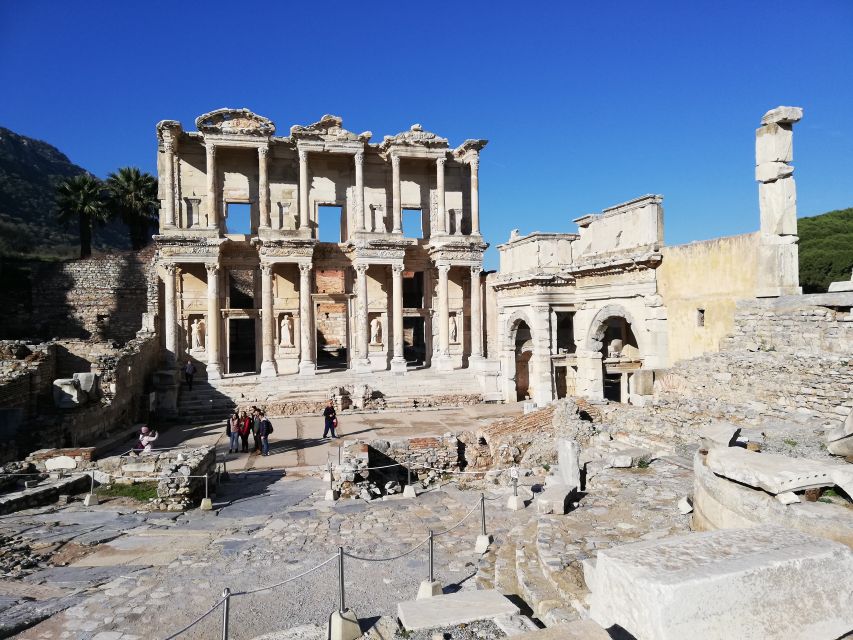
- Ephesus in a focused 2 hours: marble streets plus major stops like the Library of Celsus facade
- Temple of Artemis stop: a quick 20-minute visit tied to one of the Seven Wonders
- Driver + guide teamwork: you get solid logistics, not just facts
- Sometimes short artisan add-ons: a few tours include stops like porcelain or leather, and you can often choose how much time to spend
Kusadasi to Ephesus: the smart half-day format
This tour works because it respects reality. Cruise ships can be chaotic. Shore excursions can turn into a stampede. Here, the format is simple: meet, ride, see the key sights, return before your day gets swallowed by traffic and lines.
Pickup is set up to be easy. If you’re cruising, you meet at Kusadasi Cruise Terminal, and you only need to walk about 100 meters to the meeting point. Your guide or driver will look for you with a name sign. If you’re staying in one of the listed hotels, the tour meets you in the lobby instead. The pickup window is normally 30 to 45 minutes after cruise arrival, which is a good rule of thumb if you want to beat the busiest crowd surges.
You then drive about 20 minutes to Ephesus. That short transfer matters. It keeps the tour from feeling like you’re spending your whole shore day in a van. Plus, your guide takes the ride time to set context, so when you step into the ruins, you don’t feel like you’re staring at random rocks.
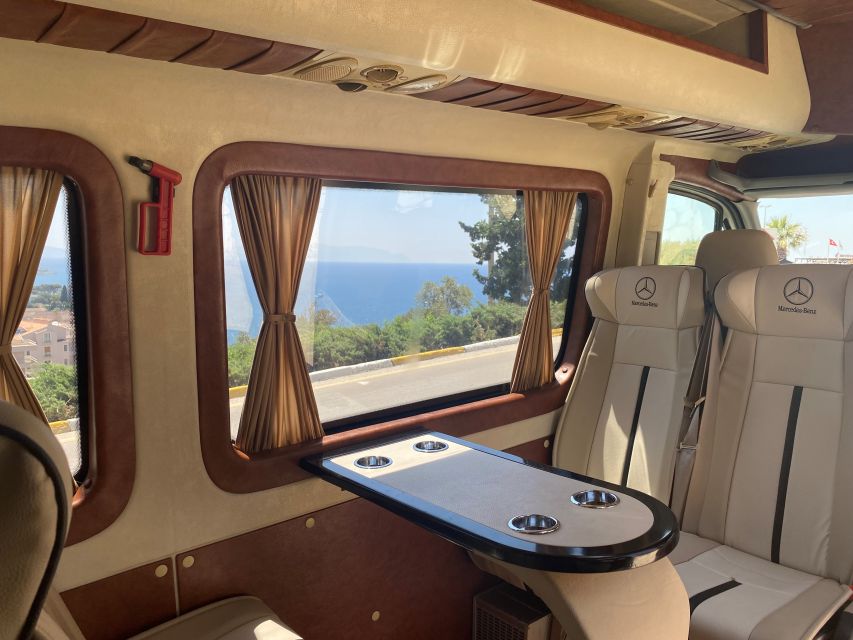
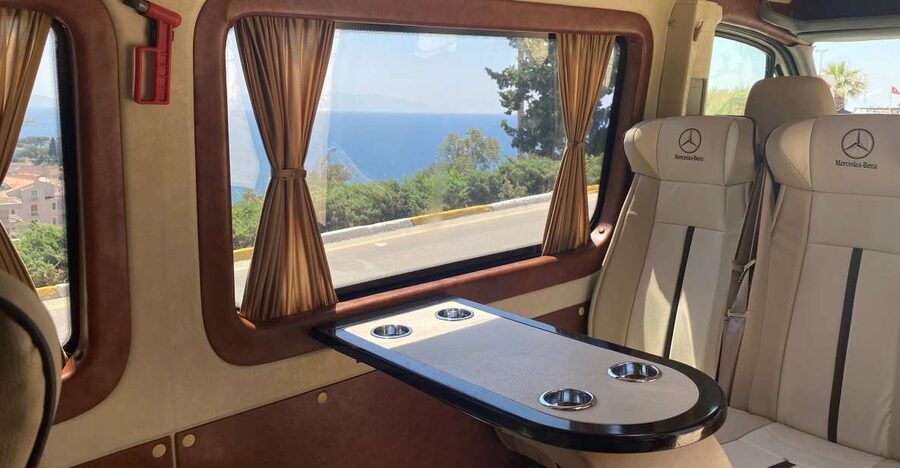
One more thing I appreciate: the air-conditioned vehicle. Ephesus ruins are outdoors, and weather in the Aegean region can be hot. Having a cool ride between stops makes the difference between enjoying the day and feeling drained.
More tours taking in the Temple of Artemis:
- Ephesus Temple of Artemis and House of Mary Private Half Day Tour
★ 5.0 · 1,573 reviews - Top-Rated: Ephesus & Artemis Tour for Cruisers WITH ENTRY TICKETS
★ 5.0 · 1,184 reviews - Ephesus and Temple of Artemis Private Tour from Kusadasi Port
★ 5.0 · 672 reviews
Ephesus on foot: marble streets and big-name ruins
Ephesus is one of those ancient places where the “main hits” are genuinely main hits. In this tour, you get a guided walk for about 2 hours, focused on the areas most worth your time.
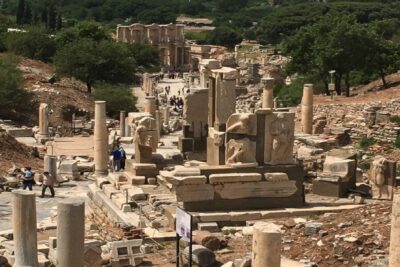
You’ll start with the feel of the city: marble streets lined with public buildings and remnants that make the ancient layout easier to picture. Ephesus was part of the Ionian League, then later a major Roman city. In its heyday, it was a crucial departure point for trade routes into Asia Minor. That port-city context helps you understand why such monumental architecture got built here in the first place.
Your route includes several stand-out stops:
- Baths of Scholastica (1st century): Even when you’re seeing ruins, it helps to remember that people used baths like social centers. This site gives you a sense of daily life, not just temples and emperors.
- Facade of the Library of Celsus: The facade is dramatic, even in partial ruin. You’ll hear the story of how it was devastated by an earthquake and then burned by invading Goths in the same year. The tragedy adds weight, but the design still does the heavy lifting.
- Colonnade of the Temple of Hadrian: The long, structural rhythm of colonnades is a great lesson in Roman urban taste. You start noticing how these cities were planned for movement, viewing, and ceremony.
- Marble streets and public spaces: This is where the whole city begins to make sense. You aren’t just checking boxes. You’re mapping the past to real sightlines.
What you should know is this: 2 hours is enough to feel the scale, but it’s not enough to cover every corner of Ephesus. So be picky in your photo choices. I’d focus on the grand facades, then use your remaining time for wider shots that show how ruins sit inside the modern landscape.
Library of Celsus facade: why it keeps stealing attention
If you only had time for one “wow” moment in Ephesus, this is a strong candidate. The Library of Celsus is famous, but what makes it hit in person is the way the facade frames light and depth. Even if you’ve seen pictures before, you’ll likely find yourself taking extra angles here, because the architecture looks different depending on where you stand.
It’s also a rare moment where the backstory comes through in a physical way. The library was shattered by earthquake, then burned by invading Goths in the same year. That mix of catastrophe and survival gives the facade an emotional punch without needing a dramatic speech.
Also, your guide’s job here is helpful. Good guides explain what you’re seeing in plain terms: what the facade likely communicated, why the library mattered, and how this building fits into a larger Roman approach to culture and prestige. Some guides, like Emma and Yavuz (names that show up often), are praised for giving enough context to stay interested without drowning you in dates.
The Grand Theater: the scale test for your brain
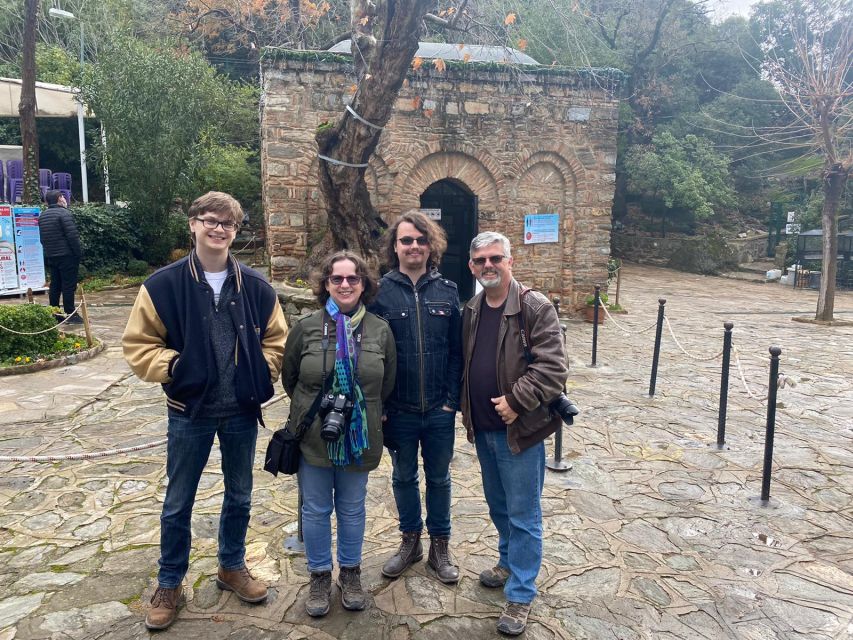
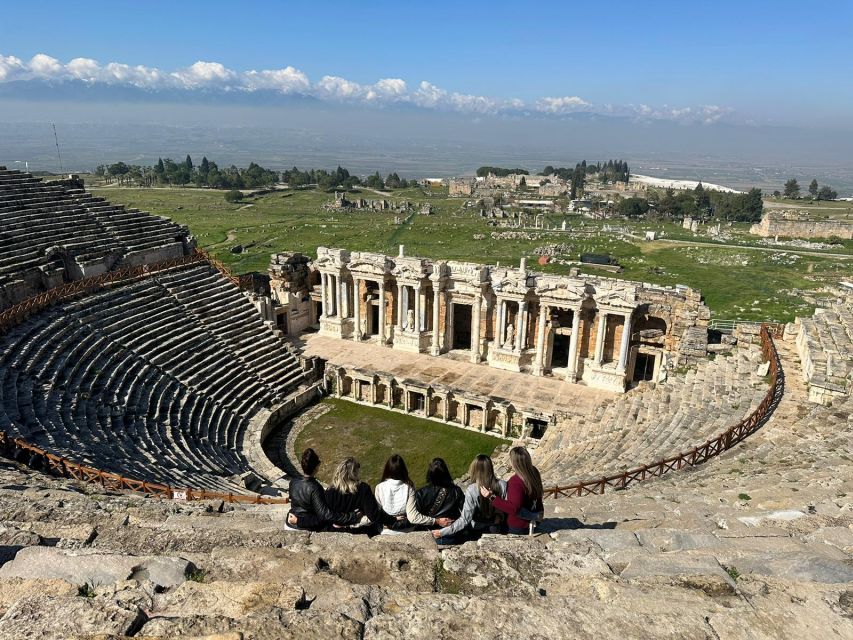
Next comes the Grand Theater, built for an audience of about 24,000 people. This is where your imagination has to do some work, but that’s not a problem. It’s the point.
Theater in Roman cities was not just entertainment. It was political and social. In Ephesus, it hosted plays, concerts, and gladiatorial fights. When you’re standing there, you can start to visualize how emperors and officials used spectacle as a way to project power and community.
A useful mindset: don’t try to read everything at once. Stand, look, then think about sound and seating. If you’ve ever wondered how ancient cities could feel alive without microphones, a theater like this answers the question fast.
Guides often give you just enough to connect the theater to the broader city, not just the structure itself. In practice, that means you leave with a sense of why this building mattered, not just that it existed.
More ways to see Ephesus:
- FOR CRUISERS: Skip The Lines PRIVATE EPHESUS TOUR &On Time Return
★ 5.0 · 8,527 reviews - Top Choice For Cruisers: Ephesus, Mary’s House WITH TICKETS+LUNCH
★ 5.0 · 7,233 reviews - PRIVATE EPHESUS TOUR FOR CRUISERS: On-time Return and Skip-Line
★ 5.0 · 5,807 reviews - PRIVATE NO HIDDEN FEES Ephesus, Mary’s House Guided Tour /GRP OPT
★ 5.0 · 2,455 reviews
Temple of Artemis: one stop, a big idea
After Ephesus, the tour heads to the Temple of Artemis, dedicated to the ancient Greek goddess of the hunt. This is your brush with one of the Seven Wonders of the Ancient World.
The stop is short, about 20 minutes. That’s deliberate. It keeps the day from running late and helps you avoid the fatigue that can set in when you cram too much into one shore excursion.
Even with limited time, Artemis is worth it because it changes the tone of the day. Ephesus gives you the city machine, the civic and Roman side. Artemis gives you the religious magnet. Pilgrims came from all over the ancient world, traveling to seek the goddess’s favor. That belief system turned a sacred space into a destination, not just a building.
Practical tip: if your timing is right, use your 20 minutes to get one wide shot for context and one close shot for details. Then step back and take in the whole setting before you move on. Short stops reward a simple plan.
How the timing works on cruise days
This tour is designed for the rhythm of a port stop. Pickup is typically 30 to 45 minutes after your cruise arrival, and your guide coordinates the transport and the walk from the terminal.
Because Ephesus is the main event, your time gets concentrated there: guided 2 hours for the big ruins, then a quicker Artemis stop. In real life, that means you’re not constantly getting in and out of the vehicle. You’re mostly walking with guidance, then riding between clusters of sights.
Here’s the one timing detail I’d take seriously: start time can vary by cruise schedule. If you have any control, aim for the earlier departure. The difference between early and peak crowds is huge at major sites, and several guides are set up to take you in when lines are shorter and the light is nicer.
Also, wear shoes you can trust. This tour includes about 1 mile of walking, plus steps. That doesn’t sound like much until you’re doing it across uneven stone and up and down small changes in level.
Skip-the-line: what it means and what it doesn’t
Skip-the-line is one of those phrases that sounds simple until you’re actually standing in front of a ticket gate. Here, entrance fees are not included, but your guide provides skip-the-line access and tickets are paid on the day.
So you get two benefits:
- You handle the crowd problem with guidance and ticketing help.
- You avoid wasting the most precious resource you have on a cruise day: time.
What it does not mean is that the day is magically weightless. You still have to visit, walk, and see things at an outdoor site where weather matters. Skip-the-line mainly protects your schedule, which is why it’s worth paying for.
I’d also be mentally prepared for entrance fees as an extra cost. One person noted that entry fees can feel steep compared to the tour price, and that’s a fair way to think about it. The tour price gets you guide and transport, but the ruins themselves still require your ticket.
Value for $29: where the money actually goes
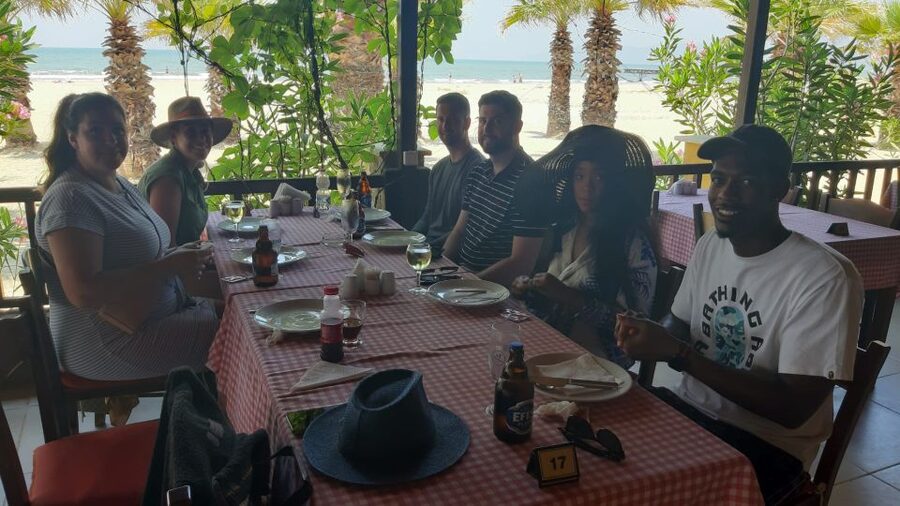
At $29 per person for a 4-hour experience, this tour is priced for affordability. And the value shows up in a few specific places.
First, you’re paying for a licensed tour guide who handles interpretation. At ruins like Ephesus, guide context is what turns scattered stones into a story you can follow.
Second, transportation is included. You get an air-conditioned vehicle, pickup and drop-off at the cruise terminal, parking fees, and the ride to Ephesus. That matters if you’re coming from a port where you do not want to figure out local transit in a limited timeframe.
Third, you’re paying for small-group comfort. With a group capped at 16, you avoid the sound chaos that can happen on bigger coach tours. This is not just nicer. It helps you actually hear the explanation over footsteps and crowd noise.
The trade-off is that it’s still a half-day. If you want a slower pace, more museum time, or you’re the type who likes to read every carving on every wall, you might find the schedule tight. But for most cruise days, this is exactly the sweet spot.
Artisan stops and shopping time: useful, not mandatory
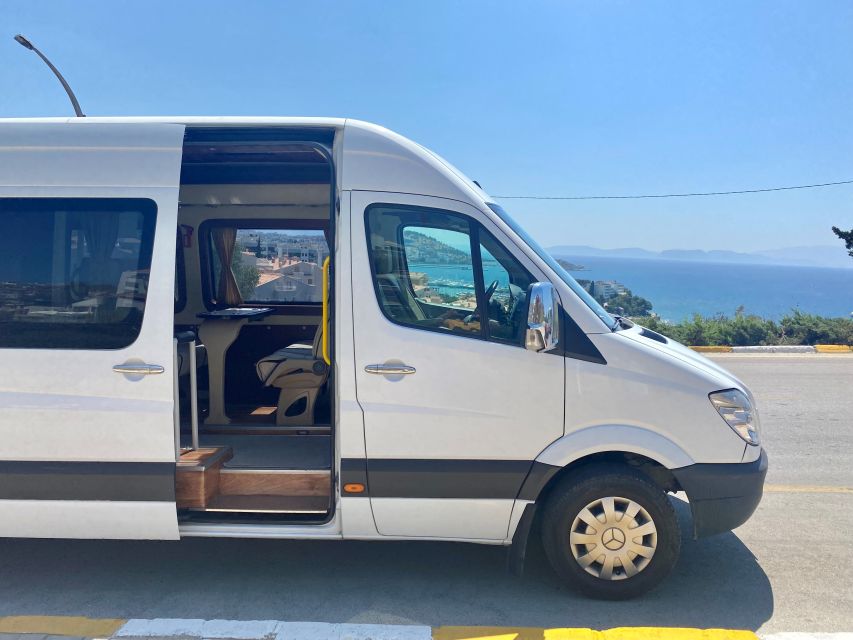
Some versions of this tour include short stops connected to local crafts, and you might see things like porcelain/ceramics, carpet weaving demonstrations, or leather workshops. Names that come up in the experience include extra stops tied to ceramics, porcelain, and leather.
Here’s how to think about it: these stops are often short and designed to show you how Turkish artisans work, not to trap you into spending money. I like that you can treat them as optional. If you enjoy craft, take a look. If you prefer straight ruins, you’re usually not losing much time.
One caution: it’s easy for shopping detours to become annoying if you’re tired. If you’re the kind of person who prefers pure sightseeing, keep your energy for Ephesus and Artemis, then approach any workshop stop with a clear yes or no.
Who should book this tour, and who should skip it
This tour fits best if you:
- Are doing a cruise day and want the major Ephesus sights without a full-day commitment
- Want the comfort of small-group size and a guide who keeps things organized
- Care about architecture and layout, not just a quick photo stop
- Are okay with about 1 mile of walking on uneven surfaces and some steps
You might want to skip it (or choose a different format) if you:
- Find stairs and uneven stone difficult
- Need a fully accessible option, because this tour is not suitable for people with mobility impairments
- Are pregnant, since it’s not recommended for that situation
Also, if you crave deeper, museum-level time at every stop, this is a highlight run. You’ll enjoy it most when you go in with the mindset of: see the classics, get the story, move on.
Should you book the Kusadasi Ephesus and Artemis skip-the-line tour?
Yes, if your priority is a smart, guided Ephesus visit without wasting your cruise day in lines or logistically messy transport. The combination of small-group pacing, skip-the-line ticket handling, and a focused itinerary that includes the Library of Celsus facade, the Grand Theater, and the Temple of Artemis makes it a strong value.
Before you book, do two reality checks. First, confirm your comfort with 1 mile of walking plus steps. Second, budget for entrance fees, since the tour price doesn’t cover them.
If you want to get in, get oriented, and leave with a clear sense of why Ephesus mattered, this tour is an easy yes. If you want a slow, unhurried archaeological vacation, you may feel slightly rushed. For most people, though, it’s the right amount of ancient wonder for a half-day.
FAQ
How long is the Kusadasi Ephesus and Artemis tour?
The tour duration is about 4 hours.
Does the tour actually include skip-the-line tickets?
Yes. The tour offers skip-the-line access for Ephesus, and entrance fees are paid on the day.
Are entrance fees included in the $29 price?
No. Entrance fees are not included, and your guide will have skip-the-line tickets that you pay for on the day.
Where do you meet if you are on a cruise?
You meet at the Kusadasi Cruise Terminal. The meeting point is about 100 meters from the cruise exit.
How much walking is involved?
Expect about 1 mile (1.5 km) of walking, including steps.
Is this a small group tour or a private tour?
It is a small-group tour with a maximum of 16 people. A private group option is also available.
Is the tour suitable for everyone with mobility needs?
It is not recommended for people with mobility impairments, and it is also listed as not suitable for pregnant women.
Recently added around Kuşadası
- Ephesus Shore Excursions For Cruisers★ 5.0 · 3 reviews
- Private Village Life Sirince Trip★ 4.5 · 11 reviews
- The Best of Ephesus Tour For Cruisers★ 4.0 · 3 reviews
- Skip Lines: Ephesus PRIVATE TOUR For Cruise Guests★ 5.0 · 11 reviews
- Small Group Ephesus Shore Excursion from Kusadasi Port★ 5.0 · 4 reviews
- Traditional Turkish Bath in Kusadasi★ 4.0 · 5 reviews
- Best of Ephesus Tour from Kusadasi Port★ 5.0 · 4 reviews
- Small Group Ephesus & Sirince Village Tour From Kusadasi / Selcuk Hotels★ 5.0 · 5 reviews
Temple of Artemis Tours, compared.
Ephesus Temple of Artemis and House of Mary Private Half Day Tour
Read our review →
Top-Rated: Ephesus & Artemis Tour for Cruisers With Entry Tickets
Read our review →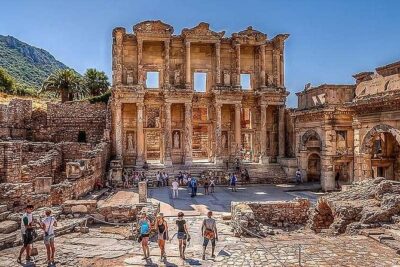
Ephesus and Temple of Artemis Private Tour from Kusadasi Port
Read our review →Skip-The-Line: Group or Private Ephesus & Artemis Tour with Lunch
Read our review →Ephesus & Temple of Artemis Tour with Entry Ticket
Read our review →
Ephesus, Mary’s House, Artemis 4 to 6 hours Tours
Read our review →
Ephesus: House of Virgin Marry & Artemis w Lunch & Ticket
Read our review →Browse the lists this tour appears in