
Reviewed · EPHESUS SHORE EXCURSIONS
New: Private The Most Detailed Ephesus Shore Excursion / with Lunch
Ephesus is one of those places where a good guide can change everything. This private shore excursion stitches together the big icons and the smaller civic details, so you leave with a clearer picture of how the city worked, not just what you posed in front of.
I like that it stays focused on Ephesus essentials, with time at stops most tours tend to rush or skip. I also like the built-in Turkish lunch plus round trip Mercedes Van pickup that helps you use your limited cruise time well. One thing to plan for: the major site entrance fees are not included, so your final budget will be higher once you add Ephesus and the other sites.
Key Points You’ll Care About Before You Go
- Private and customized so your pace and interests can steer the route.
- Skip the long lines is guaranteed, which matters a lot on busy cruise days.
- English speaking licensed guide, with time allocated to the less obvious ruins and street corners.
- Lunch is included, with drinks at lunch not included.
- Terrace Houses are on the menu, but they can mean a bit of climbing, so comfortable shoes help.
- The Great Theatre ticket is listed as included, though other site entrances are still extra.
How This Private Ephesus Tour Beats the Usual Cruise Day Rush
If your cruise day feels like a stopwatch, this kind of private shore excursion is the smart move. Instead of herding you through a checklist, the tour is built around a guided flow through Ephesus, then adding a few headline religious and cultural stops that put the Roman city into context.
You get a licensed English speaking guide, pickup and drop off, and air conditioned transport. That is not just comfort. It is time saved, and it reduces the mental stress of figuring out where to go next while you are also trying to beat crowds. On days when port schedules are tight, that matters.
The itinerary also leans into detail, especially around public buildings and street life. You will hear about the Harbour Street and the Marble Street, then hit major stops like the Library of Celsus and the Great Theatre. But you also get time at places tied to administration and civic meetings, like the State Agora and the Odeion. That mix is what makes the day feel more complete than a grab-and-go tour.
More shore excursions timed to your sailing:
- FOR CRUISERS: Skip The Lines PRIVATE EPHESUS TOUR &On Time Return
★ 5.0 · 8,527 reviews - Top Choice For Cruisers: Ephesus, Mary’s House WITH TICKETS+LUNCH
★ 5.0 · 7,233 reviews - PRIVATE EPHESUS TOUR FOR CRUISERS: On-time Return and Skip-Line
★ 5.0 · 5,807 reviews
Price and Entrance Fees: The Real Value Math
The tour price is $79.20 per person and the duration is listed as about 5 to 7 hours. For a private tour with pickup, a Mercedes Van, a licensed guide in English, and lunch included, that price is often competitive, especially when you factor in how costly taxi rides can get in a place like Kusadasi.
But here is the part you must budget for: the big entrance fees are not included. The listed extras are:
- Ephesus Ancient City: €40 per person
- Virgin Mary House (Meryemana): €18 per person
- Ephesus Terrace Houses: €15 per person
- Basilica of St John: €6 per person
Drinks at lunch are also not included.
So what you are really buying with the $79.20 rate is the guided experience plus transport plus lunch, while you still pay for the sites themselves. The good news is that the tour includes guaranteed skip the long lines, and in practice that can cut down the most painful part of Ephesus visits, the time trapped at ticketing and entry queues.
If you are traveling as a couple or family and you want a planned day with a professional guide, the value usually lands in the sweet spot. If you are on a tight budget and would rather DIY, you might get a cheaper day by paying only the admissions and walking on your own. Still, the private pace and line-skipping often makes the difference feel worth it.
Getting Picked Up and Staying Comfortable in a Mercedes Van
The tour includes pickup and drop off, plus parking fees, using an air conditioned Mercedes Van. That sounds like a basic detail until you consider the practical reality of a port stop: heat, waiting around, and the difficulty of finding your meeting point again after you return from the ruins.
Meeting point details are clearly spelled out:
- Cruise passengers meet at the exit gate of the Immigration Terminal at the cruise port, with a sign showing the OTTI Travel name.
- Hotel pickup meets you at your hotel reception.
- Airport pickup meets at the exit gate of the domestic terminal with an OTTI Travel sign.
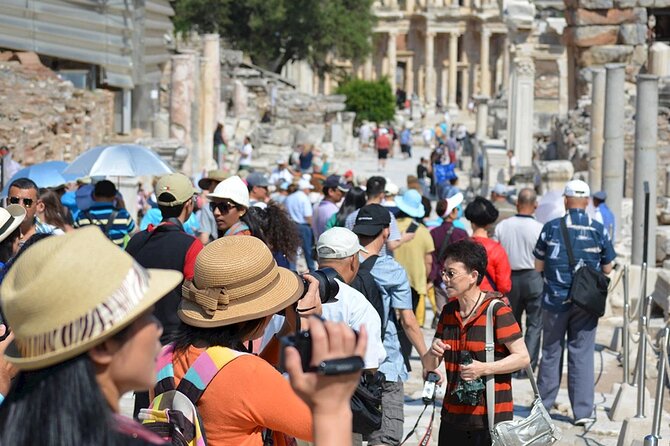
Also, the tour is English speaking, and it is a private tour for your group only. If you have mobility limits, it is worth noting the tour asks for moderate physical fitness. You are visiting ruins on hills and some stops involve stairs, especially at the Terrace Houses.
A Day Built Around Mary, Then the Roman City
This tour uses a classic Ephesus rhythm: start with a meaningful religious stop, then move into the ancient city, and finish with additional major spiritual sites. That ordering helps, because after the first big drive and entry, you are warmed up for walking sections through the ruins.
More ways to see Ephesus:
- PRIVATE NO HIDDEN FEES Ephesus, Mary’s House Guided Tour /GRP OPT
★ 5.0 · 2,455 reviews - For Ship Guests:BEST SELLER EPHESUS PRIVATE TOUR & On Time Return
★ 5.0 · 2,029 reviews - ALL INCLUDED: Ephesus Ruins, Mary’s House Tour incl ENTRY TICKETS
★ 5.0 · 1,670 reviews - Ephesus Temple of Artemis and House of Mary Private Half Day Tour
★ 5.0 · 1,573 reviews
Stop 1, Meryemana (Virgin Mary’s House)
You get about 30 minutes at the House of the Virgin Mary. Admission here is not included, so plan for the €18 fee.
Even if you are not a history fanatic, this is the kind of stop that changes how you experience the rest of the day. Ephesus is famous for Roman power and Greek architecture, but Meryemana brings a different tone. Expect a calmer pace, with time to look and absorb before you shift back into the bustle of ancient city remains.
Stop 2, Ancient City of Ephesus
After that you move into Ephesus proper, with around 2 hours allocated to the Ancient City circuit. Admission is not included, with the listed fee at €40 per person.
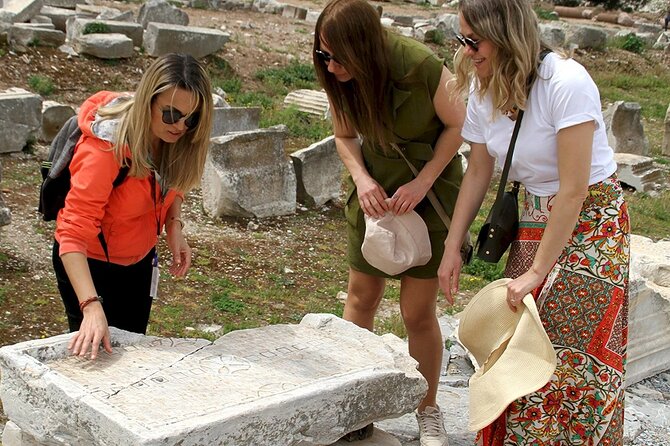
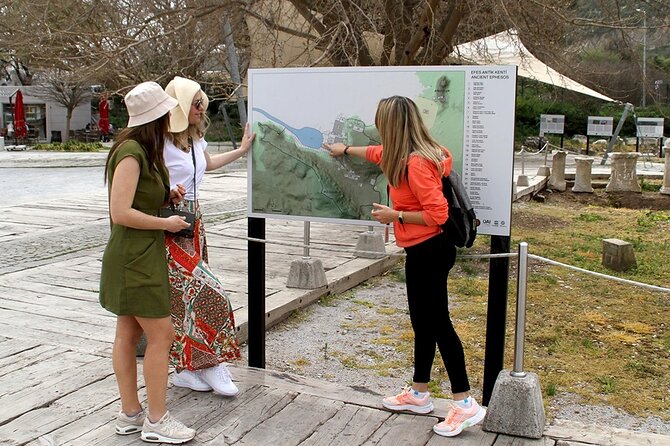
This portion is where the tour earns its name as detailed. You do not just race past famous monuments. You visit the Harbour Street, the theatre area, the Marble Street, the Gate of Mihridates and Mazes, the Commercial Agora, and even smaller functional spots like the latrina (a public restroom). You also see the Hadrian Temple area, the Scolastica Baths, Trajan Fountain, Curetes Street, Polio Fountain, Memnius Monument, the Temple of Domitian, and more.
Why that matters: Ephesus was a working city. Streets, fountains, meeting places, and public facilities helped power daily life. A guide who knows how to connect those dots makes the ruins feel like a city instead of a photo backdrop.
State Agora and the Odeion, Places About Meetings, Not Merchants
Two of the most interesting stops here are not the obvious crowd magnets. They are civic spaces, meaning you can learn a lot about governance and public life.
State Agora
You get about 15 minutes at the State Agora. Admission is not included here.
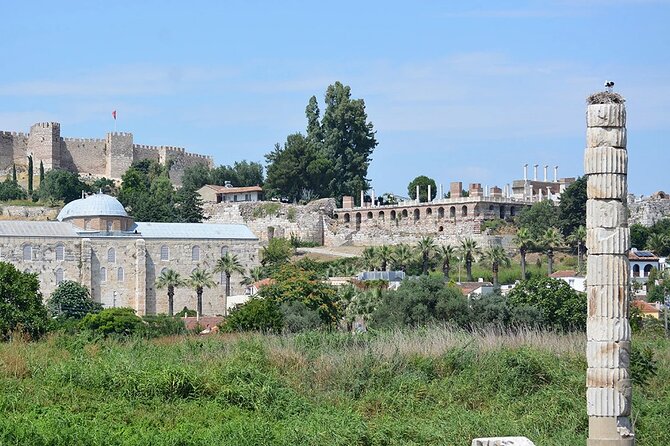
This agora served governmental and business discussions, not just trade. It is also tied to older layers of the city, including evidence of graves from earlier periods and an archaic stone-paved road. There is also mention of a water reservoir that connects to the Pollio Aqueduct, which you can see about five kilometers away on the Selçuk to Aydin highway.
If you like explanations that connect archaeology to daily infrastructure, this is a strong stop. It helps you understand why Ephesus looked the way it did and how water management mattered.
The Odeion
Another 15 minutes is scheduled at the Odeion, admission not included.
The Odeion was a small theatre-like building with a double purpose. It functioned as a meeting place for the senate or council and also as a concert hall. It could seat around 1,500 people, so this was not a casual gathering space. It was a place for public voices.
Even if you do not catch every detail, this stop gives you a sense of how the city organized public life in smaller venues, not only in the huge Great Theatre.
Temple of Domitian, Hercules Gate, and Hadrian Temple
These stops give you that “Roman emperor power made stone” feeling. They are short, but they are information dense.
Temple of Domitian
About 15 minutes, with admission not included.
This temple is described as being dedicated to an emperor, built on a wide high terrace with visible stairs. It is also tied to the honor of being allowed to build an Emperor Temple, known as neocoros. The design is pro-style, with a set column layout, and there is mention of an altar area that is now displayed in the Izmir Museum.
What I like about stops like this is they show you how Rome used architecture to make authority physical. The ruins may look fragmentary, but a guide can point out what still communicates the original message.
Hercules Gate
About 15 minutes, admission not included.
Hercules Gate sits near the end of Curetes Street. It was named for the Hercules relief, and the structure’s placement is tied to later movement of parts in the fourth century AD. You can still see the two sides of the columns today, while other elements were not found.
This is a great stop for anyone who likes street-level archaeology. The gate narrowed the access to the street and helped turn Curetes Street into a more pedestrian area over time.
Temple of Hadrian
About 10 minutes, admission not included.
Temple of Hadrian is described as one of the best-preserved structures on Curetes Street. It was built before 138 AD and dedicated to Emperor Hadrian. It includes Corinthian columns supporting an arched facade, plus a central relief tied to Tyche, goddess of victory. You will also see references to statue bases set in front.
This stop is quick by design, but it is one of the places where the “still beautiful” factor shows through. If you are trying to choose one short stop to pay attention to, this is a good candidate.
Terrace Houses and the Stair Test That’s Worth It
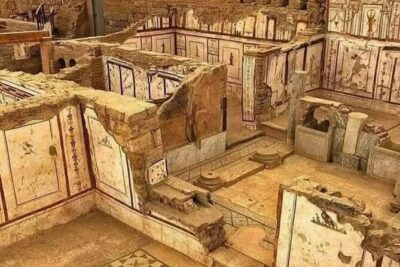
Ephesus Terrace Houses are scheduled for about 30 minutes. Admission is not included, with the listed €15 fee.
These homes are often the part that surprises people. They sit on the hill opposite Hadrian Temple and are also called the houses of wealthy Romans. The value here is how they show family life and how the wealthy lived in a city with public monuments all around.
The layout is described as three terraces with six residential units, and the oldest building dates back to the first century BC, with use continuing until the seventh century AD. The site also has protective roofing, plus mosaics and frescoes that have been consolidated, with two houses opened to the public as a museum.
Now the honest drawback: terrace houses usually mean uneven ground and stairs. The tour does ask for moderate physical fitness, and this is where that matters most. If you do not do stairs well, it might still be manageable, but go slowly and plan on taking breaks.
Library of Celsus and the Great Theatre, the Two Big “Wow” Stops
These are the headline ancient sites, but the tour does more than stack them back-to-back. It gives you enough time to actually understand what you are seeing.
Library of Celsus
About 30 minutes, admission not included.
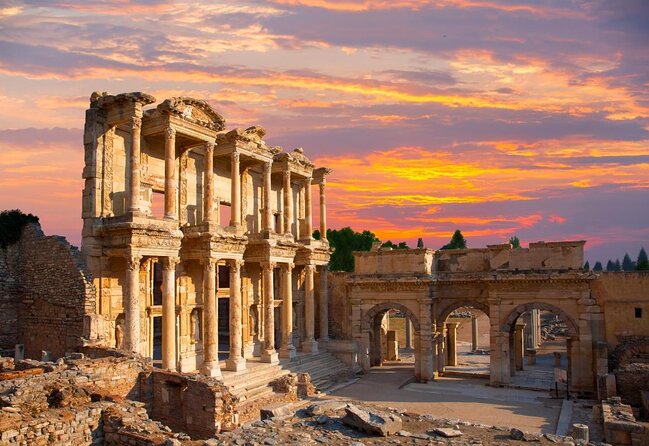
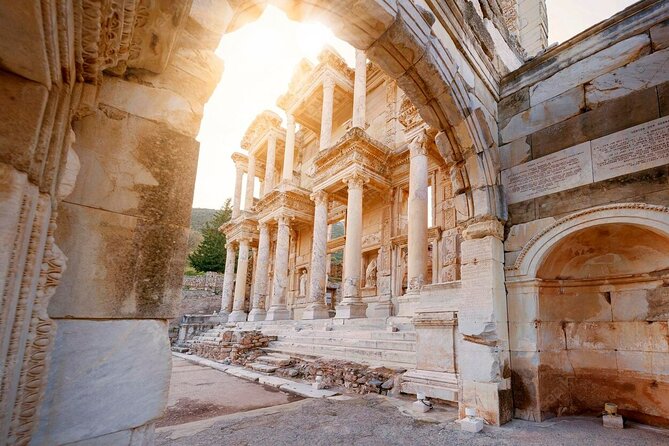
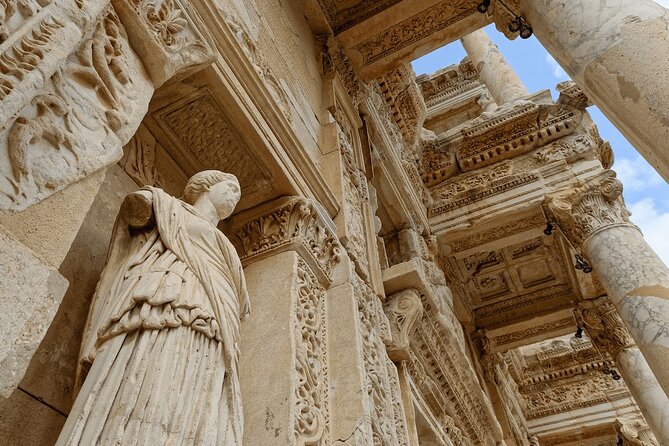
Celsus Library was built in the second century AD as a monumental tomb. The grave sits beneath the ground floor, behind the entrance area, and there is a statue of Athena referenced as part of the symbolism. The library is described as storing more than 12,000 scrolls, with temperature and humidity management through double walls behind the bookcases.
This stop works because it is not just architecture. It is a window into how people read, stored knowledge, and treated scholarship as an important public identity.
Ephesus Ancient Greek Theatre
About 25 minutes, and this one is marked as admission ticket included.
The Great Theatre is described as the most magnificent structure in the city and the largest in Anatolia, with seating for about 25,000 people. Construction begins in the Hellenistic period and later gets enlarged in the Roman period into its current style. The cavea has 66 rows of seats divided into sections, and you can still see evidence like marble pieces used for restoration and references to the Emperor’s Box.
The big point is how multi-use the theatre was. It was used for performances and also for religious, political, and philosophical discussion, plus gladiator and animal fights.
If you care about the “how could they possibly fit everyone” part, this is where it clicks. A guide can help you visualize the stage building and the flow of crowds.
Temple of Artemis Foundations and Basilica of St John
These final stops shift mood again. You move from Roman civic space into religious identity across centuries.
Temple of Artemis Ruins
About 40 minutes, admission not included.
The Temple of Artemis is famous as one of the Seven Wonders of the ancient world. Today you see foundations rather than full ruins, because the site turned swampy over the centuries. The materials were marble, with sculptured capitals and shafts, and some of the most beautiful remains are said to be in the London British Museum.
What to expect on the ground: you might feel like you are looking at less than you imagined. But this is also a lesson in scale. Artemis was huge, and even foundations can communicate proportions when your guide helps you interpret what you are seeing.
Basilica of St John
About 40 minutes, admission not included.
This stop is described around the tradition that St John spent his last years in the region and was buried on Ayosolug Hill. A small chapel was constructed over his grave in the fourth century AD, and later it became a basilica under Emperor Justinian in the sixth century.
The tour adds religious context around the early Christians period and the idea of John writing his Gospel in Ephesus, with Revelation on Patmos in 96 AD.
If you want one last emotional “anchor” after walking through stones for hours, this is a good one. It gives you a sense of continuity, how this region stayed meaningful long after the ancient city’s peak.
Lunch in Kusadasi: Local Food, Included Time, and How to Handle Drinks
Lunch is included as part of the tour. Drinks at lunch are not included, so decide ahead of time if you want to pay extra for tea, water, or other drinks.
People describe the meal as good and generous, with a local touch like pomegranate juice and flavors linked to olive oil. One person even mentioned tasting local figs arranged during the day. Also, the lunch is where your guide can usually answer your questions without you needing to keep moving.
One practical tip: because drinks are extra, bring a clear payment plan. If you do not want surprise spending, keep it simple and choose water.
Optional Shopping Pressure, and How I Suggest You Keep Control
While shopping is not listed as a core itinerary item in the tour details you have, several people have reported a rug-related stop after lunch, like a carpet weaving or rug workshop.
Here is my advice: if you want souvenirs, go in curious and ask to keep it brief. If you do not want sales time, say so early and stick to it. Many shop employees are polite, but some interactions can feel pushy if you hesitate.
A good private tour should still let you customize. If shopping is not your thing, treat the day like a museum visit, not a sales circuit.
Choosing the Right Guide Name, When You Can
One of the standout patterns from these tours is how much the guide matters. Names that show up strongly include Selin, Nesli, Mehmet, Ahmet, Tas, Asli, Özgür (Oscar), and Mary, with multiple people praising their ability to answer questions, adjust the route, and make the ruins feel understandable.
You cannot always pick your guide. But if you get any chance to note preferences when booking, it is worth using keywords like detailed explanations or family-friendly pacing. A private tour gives you more leverage than a bus group.
Should You Book This Ephesus Private Shore Excursion?
Yes, if you want a private, guided Ephesus day with skip-the-line support, a planned pace, and enough time to go beyond the usual highlights. This is a great fit for couples and families who hate rushing and want context, not just sights. It also works well on a cruise because pickup and timing reduce the risk of getting lost.
Think twice if your budget cannot absorb entrance fees, since the listed extras total up quickly once you add Ephesus, Meryemana, Terrace Houses, and St John. Also be honest with yourself about stairs and uneven ground at Terrace Houses, because the tour calls for moderate physical fitness.
If you like ruins explained in a practical way, and you want lunch included without you hunting for a restaurant in a hurry, this is a strong choice.
FAQ
How long is the Ephesus shore excursion?
It is listed as about 5 to 7 hours.
What is the price per person?
The price is $79.20 per person.
What is included in the tour?
It includes an English speaking professional licensed guide, pickup and drop off, guaranteed skip the long lines, transport in an air conditioned Mercedes Van, parking fees, and lunch.
What entrance fees are not included?
Ephesus Ancient City is €40 per person, Virgin Mary House is €18 per person, Ephesus Terrace Houses is €15 per person, and St John Basilica is €6 per person. Lunch drinks are also not included.
Does the tour include any admission ticket?
The Ephesus Ancient Greek Theatre is listed as admission ticket included. Other sites are marked as not included.
Where do cruise passengers meet the tour?
You meet at the exit gate of the Immigration Terminal of the cruise port with a board that shows OTTI Travel.
Can I cancel for a refund?
Yes. You can cancel up to 24 hours in advance for a full refund.
Recently added around Kuşadası
- Ephesus Shore Excursions For Cruisers★ 5.0 · 3 reviews
- Private Village Life Sirince Trip★ 4.5 · 11 reviews
- Skip Lines: Ephesus PRIVATE TOUR For Cruise Guests★ 5.0 · 11 reviews
- The Best of Ephesus Tour For Cruisers★ 4.0 · 3 reviews
- Small Group Ephesus Shore Excursion from Kusadasi Port★ 5.0 · 4 reviews
- Traditional Turkish Bath in Kusadasi★ 4.0 · 5 reviews
- Best of Ephesus Tour from Kusadasi Port★ 5.0 · 4 reviews
- Small Group Ephesus & Sirince Village Tour From Kusadasi / Selcuk Hotels★ 5.0 · 5 reviews
Ephesus Shore Excursions, compared.
For Cruisers: Skip The Lines Private Ephesus Tour & On Time Return
Read our review →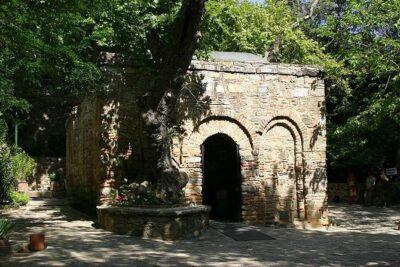
Top Choice For Cruisers: Ephesus, Mary’s House With Tickets+Lunch
Read our review →
Private Ephesus Tour For Cruisers: On-time Return and Skip-Line
Read our review →
For Ship Guests: Best Seller Ephesus Private Tour & On Time Return
Read our review →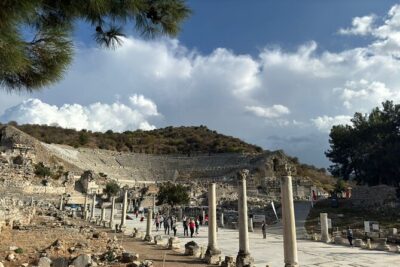
Private Tour For Cruisers: Mary’s House (Meryemana) and Ephesus
Read our review →
Top-Rated: Ephesus & Artemis Tour for Cruisers With Entry Tickets
Read our review →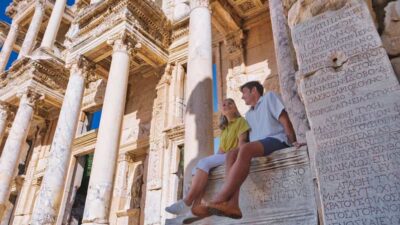
Ephesus: Small Group Tour for Cruise Passengers
Read our review →
For Cruise Guests:Best Seller Ephesus Private Tour/On Time Return
Read our review →Browse the lists this tour appears in