
Reviewed · PRIENE, MILETUS & DIDYMA TOURS
Priene, Miletos and Didyma Tour with Lunch
Priene, Miletus, and Didyma make a strong day trip because you get three different flavors of Ionian Greece, all tied together by coast, prophecy, and big-city ambition. You’ll walk among well-preserved ruins and end up staring at the scale of the Temple of Apollo in Didyma. It’s a classic route for history fans who want more than just one site.
Two things I like a lot: the tour keeps the day moving with a professional English guide, not just a bus and a map, and it includes lunch that’s served in a more local-feeling setting (with vegetarian options). You also get hotel or port pickup and return, so you spend less energy figuring logistics.
One thing to consider: entrance fees are not included, and parts of Priene involve a real climb. If you want very relaxed pacing, plan to do plenty of walking, because this isn’t a sit-and-watch tour.
Key highlights you should care about
- Priene’s hilltop Temple of Athena and a theatre with famous front-row seats, plus strong acoustics
- Miletus as a coastal power, with a theatre expanded in the Roman era and time for the included museum
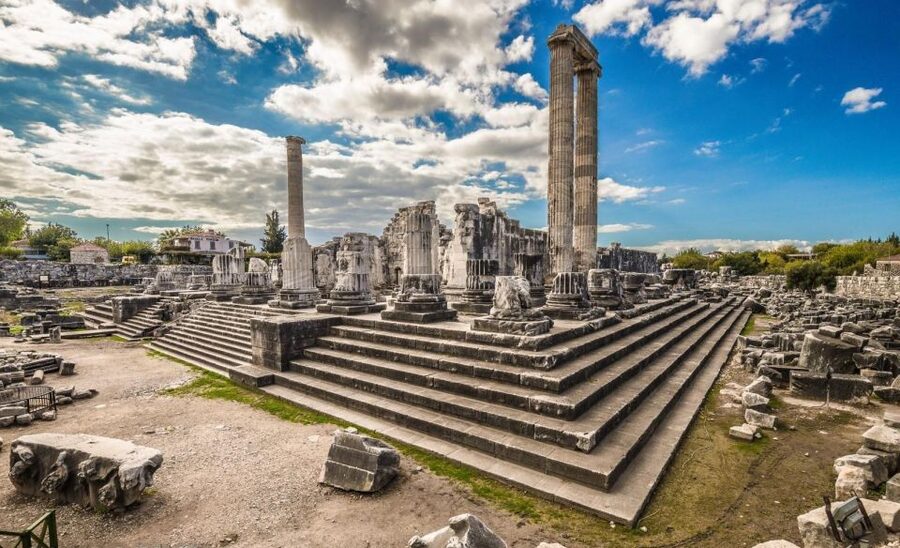
- Didyma’s Temple of Apollo, planned as a dipteros with two rows of columns, and left unfinished
- Small group size (15 max) and a guide who keeps explaining so the ruins make sense
- Skip-the-ticket-line included, which helps when your time window is tight
- Lunch included, and vegetarian options are specifically mentioned as available
Why this Priene, Miletus, Didyma route makes sense in 8 hours
This tour focuses on three big names in Ionia, Turkey, without trying to squeeze in everything. The payoff is that each stop has a clear reason to be there.
Priene gives you a well-laid-out ancient city feel, perched above the sea. Miletus shifts the tone to a larger, coastal, commerce-driven power. Then Didyma changes the mood again, because it’s tied to prophetic oracles and one dramatic temple project.
If you are short on time, or you already plan to see Ephesus, this kind of day trip is a smart way to add variety. You’ll see different city planning, different theatre stories, and a temple plan that was never completed.
More of the Priene, Miletus and Didyma circuit:
- Ephesus, Priene, Miletos and Didyma Tour
★ 4.9 · 21 reviews - Priene Miletos Didyma Tour From Kusadasi / Selcuk Hotels
★ 5.0 · 15 reviews - NO HIDDEN FEES : Private Ephesus – Miletus – Didyma
★ 5.0 · 13 reviews
Pickup, group size, and how the day actually runs
The tour is designed as a full day at 8 hours, with pickup and return to your hotel or port. That matters because you avoid the “half a day is gone to transportation” problem that hits a lot of independently planned outings.
The group is kept small, limited to 15 participants, which usually means you can ask questions and get answers without feeling like you are shouting across a crowd. It also helps at the ruins, where walking routes can get awkward if you’re stuck behind people who aren’t moving.
Pacing is not about rushing you. The schedule aims to keep the day complete, with enough time at each site to see the main points and not just pass through. That said, it is still a tight 8-hour loop, so you should expect walking and stop-and-go moments.
Priene: hilltop Temple of Athena and a theatre built for big crowds
Priene is the kind of site where you start recognizing the logic of ancient city life. It was important well beyond the classical era, including the Byzantine period, and it sat in an Ionian world that was tightly connected by sea.
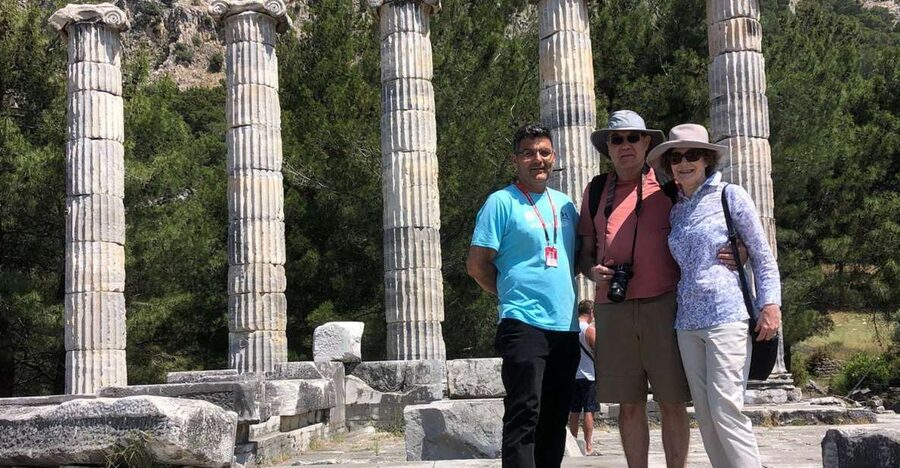
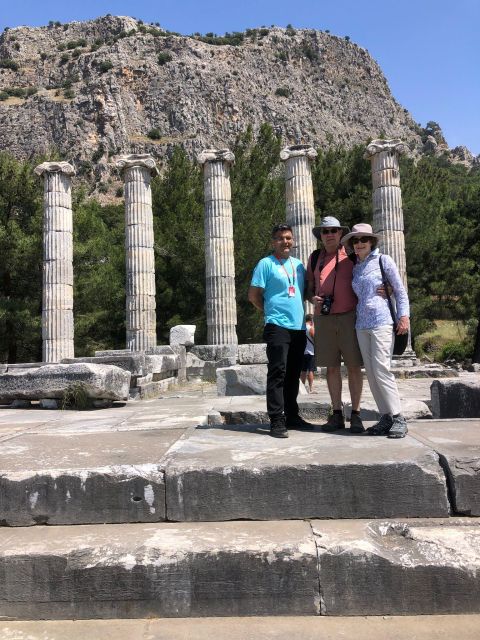
What you’ll likely focus on first is the hilltop main building, the Temple of Athina (Athena). Even if you only spend time at the overview level, the location tells you a story: religious buildings were meant to be visible and meaningful, not hidden behind the practical stuff.
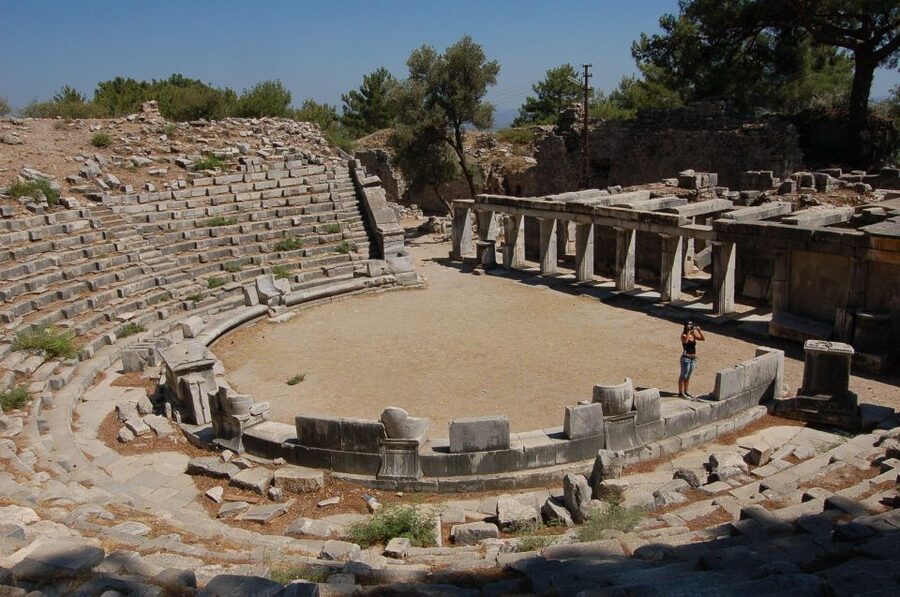
Then comes the theatre, and it’s a standout. The Priene theatre could hold about 6,500 people, built in the Hellenistic era. One detail that makes this theatre memorable is that it has five special front-row seats, often associated with major figures. It also has a reputation for real acoustics, which is exactly what you want when you are trying to imagine a performance in a space that was built for speaking and listening.
A practical note: Priene involves climbing. One review specifically called the climb reasonably steep. So wear shoes that grip and don’t pinch your feet. If your legs are not happy with slopes and steps, this stop will feel like the hardest part of the day.
The sea-linked city life and the “small luxury” detail
Priene wasn’t just temples and theatres. It also had a harbour, and it leaned on the sea. That matters because maritime cities in Ionia tended to grow fast, trade widely, and build confidently.
There’s also an interesting detail about everyday life: Priene is described as having luxury houses, and a surprisingly high percentage of citizens were said to have had their own bathroom and toilet. Even if you take that number as a snapshot rather than a strict headcount, it gives you a sense that this wasn’t a poor backwater. It was a city with real money and real ambition.
A different kind of day from the same port:
- FOR CRUISERS: Skip The Lines PRIVATE EPHESUS TOUR &On Time Return
★ 5.0 · 8,527 reviews - Top Choice For Cruisers: Ephesus, Mary’s House WITH TICKETS+LUNCH
★ 5.0 · 7,233 reviews - PRIVATE EPHESUS TOUR FOR CRUISERS: On-time Return and Skip-Line
★ 5.0 · 5,807 reviews - PRIVATE NO HIDDEN FEES Ephesus, Mary’s House Guided Tour /GRP OPT
★ 5.0 · 2,455 reviews
Miletus: four ports, a major theatre, and time for the museum
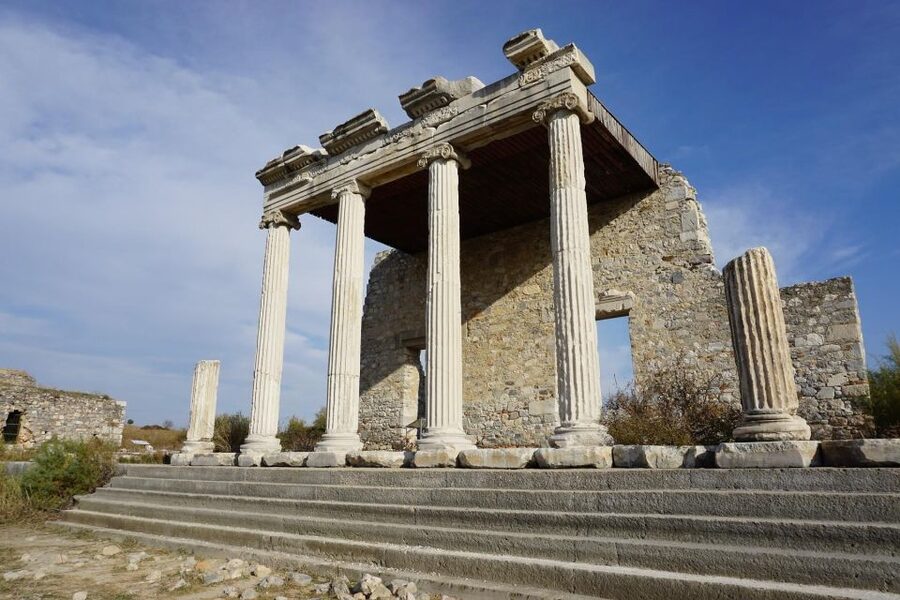
Miletus sits north of Didyma and south of Priene, and it plays the “big coastal power” role in this itinerary. It’s described as having four ports, which is why it was one of the key settlements in the Ionian era. If Priene feels like a city with a strong civic layout, Miletus feels like a city built to handle trade.
Its golden age is placed in the 6th and 7th centuries BC, and the ruins reflect the layers of changing eras. One of the main visual anchors is the theatre. The Hellenistic theatre is described as holding about 5,300, and then being enlarged in the Roman era to a capacity around 15,000. That leap tells you what happened when empires took over. Same location, different scale, louder crowds.
Near the area, you may also see the Ilyas Bey Mosque (1404), mentioned as a place used for prayer and also as a school. It’s a reminder that the region didn’t stop living after the ancient period. Even when you are staring at ancient stones, the area keeps functioning.
The museum stop is not optional, and that’s why it helps
The Miletus museum is included, and this is a key value piece. The ruins are impressive, but a museum lets you connect names, materials, and everyday objects. Here, the museum is described as holding things like jewelry and other finds.
If you tend to get more from context than from raw architecture, you’ll appreciate that included stop. Even a short visit can make the outdoor site feel less like scattered blocks and more like a lived-in city.
Didyma: the Temple of Apollo and the unfinished dipteros plan
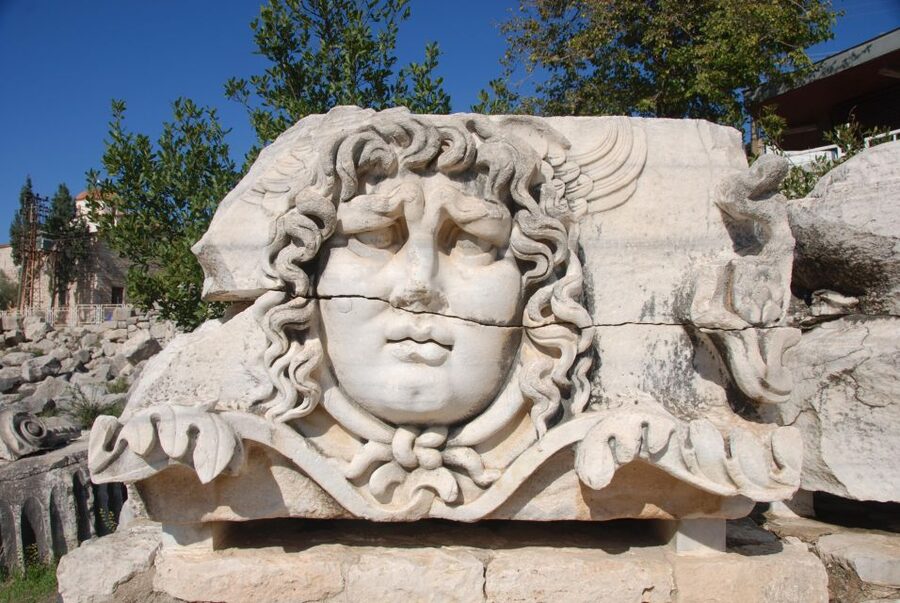
Didyma is smaller than the other stops, but it earns its place. The area is described as the center of prophetic oracles, which gives you a different lens for what you are seeing.
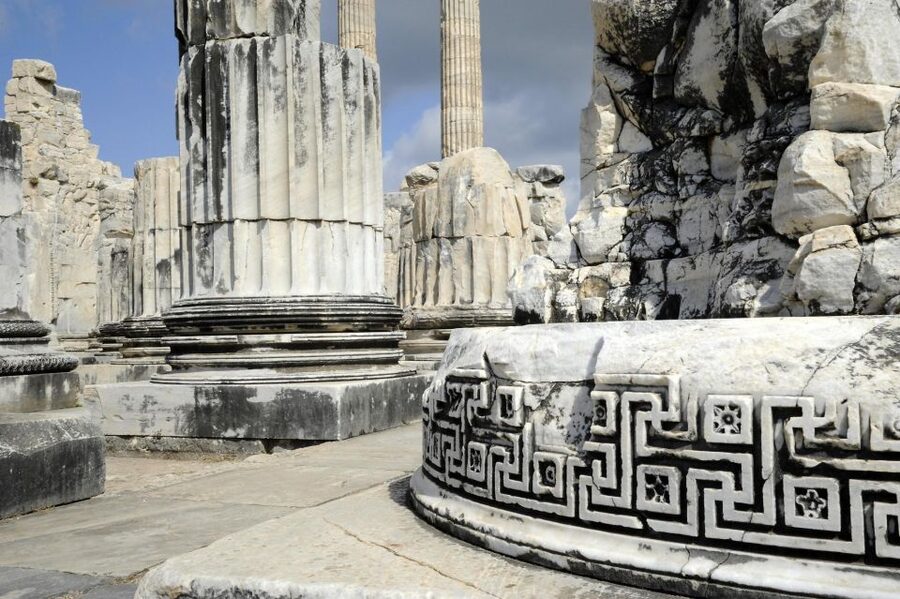
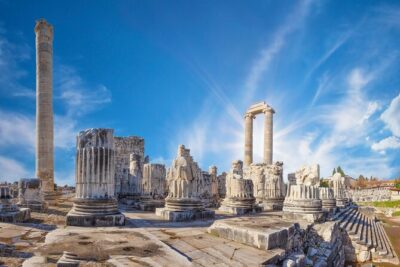
The star attraction is the Temple of Apollo in Didyma. The plan is described as a dipteros, meaning a layout with two rows of columns. That’s the kind of detail that makes the temple feel technical and intentional, not just grand.
There’s also a twist: it was never finished. So while you’re there, you are not just looking at ruins, you are looking at a project that stopped midstream. That unfinished state changes how you interpret what remains. It’s a reminder that big plans in antiquity were still at the mercy of money, politics, and time.
Time can feel tight at Didyma in this type of schedule. One run is described as giving about half an hour there, with the main focus on the temple area and the theatre-like touring flow. If you are the kind of person who wants long still moments and slow wandering, you may wish you had more time here. But even in a shorter window, the temple remains are the kind that register immediately.
Lunch between ancient sites: included, practical, and with vegetarian options
Lunch is included in the price, and it’s not treated like an afterthought. It’s described as wonderful by one guest, and another notes it was basic but good. What matters is that it’s served at a restaurant that feels Turkish rather than tourist-only, and vegetarian options are mentioned more than once.
For me, that hits the sweet spot. When you are on a ruins day, a good meal does more than fill your stomach. It keeps your energy steady so you can enjoy the walking and the explanations instead of counting minutes until the next bench.
Price and value: what $142 covers, and what you must budget separately
At $142 per person for about 8 hours, the value comes from the bundle:
- Professional guide in English
- Lunch included
- Pickup and return to your hotel or port
- Skip-the-ticket-line
Entrance fees and personal expenses are not included. That means you should budget extra for tickets when you arrive at each site. It’s not unusual for tours like this, but it’s important to know so you are not surprised when you reach the gates.
The skip-the-line piece is also worth something on a day like this. Even small time savings add up when you’re trying to cover three sites without turning the day into a series of queues.
What to bring, and how to avoid the common Priene problems
The tour lists a short essentials list, and it’s the right one.
Bring:
- Comfortable shoes
- Sunglasses
That shoe advice is not just generic. Priene includes climbing, and the theatre area has lots of steps and uneven surfaces. If you have blisters easily, this is the day to prepare like you mean it.
Sunglasses help because you’ll have exposed walking and bright stone under open sky. Shade is not guaranteed, so glare can make it harder to read details in the ruins.
Who this tour is best for
This is a strong fit if you:
- like archaeology and want the ruins explained in plain language
- want to see Priene, Miletus, and Didyma in one organized day
- prefer a small group and a guide who keeps the whole loop on track
- want an easy meal stop without hunting for lunch on your own
It’s also a reasonable option if you’re on a cruise schedule, since pickup and return to port are part of the plan.
Should you book the Priene, Miletos and Didyma tour with lunch?
I’d book this if you want a well-structured archaeology day in Ionia and you like the idea of doing three major stops with one guide. The included museum time, the lunch, and the skip-the-line detail make it feel more complete than the barebones versions.
Skip it or consider a different format if you:
- want lots of free time at each site
- struggle with steep climbs and lots of walking, since Priene can be tough
- don’t want to add entrance fees on top of the tour price
If you like ruins you can understand, and you don’t mind a packed walking day, this one is a solid choice.
FAQ
How long is the Priene, Miletos and Didyma Tour with Lunch?
The tour lasts 8 hours.
Is lunch included?
Yes. Lunch is included in the tour price.
Are entrance fees included?
No. Entrance fees are not included.
What language is the guide?
The tour includes a live English-speaking guide.
What’s the group size?
This is a small group, limited to 15 participants.
Do they pick you up from your hotel or port?
Yes. The tour includes pickup and return to your hotel or port.
Does it include skip-the-ticket-line?
Yes. The tour includes skip the ticket line.
What should I bring?
Bring comfortable shoes and sunglasses.
Is there free cancellation?
Yes. Free cancellation is available up to 24 hours in advance for a full refund.
Recently added around Kuşadası
- Ephesus Shore Excursions For Cruisers★ 5.0 · 3 reviews
- Private Village Life Sirince Trip★ 4.5 · 11 reviews
- The Best of Ephesus Tour For Cruisers★ 4.0 · 3 reviews
- Skip Lines: Ephesus PRIVATE TOUR For Cruise Guests★ 5.0 · 11 reviews
- Small Group Ephesus Shore Excursion from Kusadasi Port★ 5.0 · 4 reviews
- Traditional Turkish Bath in Kusadasi★ 4.0 · 5 reviews
- Best of Ephesus Tour from Kusadasi Port★ 5.0 · 4 reviews
- Small Group Ephesus & Sirince Village Tour From Kusadasi / Selcuk Hotels★ 5.0 · 5 reviews
Priene, Miletus & Didyma Tours, compared.
Priene Miletos Didyma Tour From Kusadasi / Selcuk Hotels
Read our review →
NO Hidden Fees : Private Ephesus – Miletus – Didyma
Read our review →
Kusadasi Shore Excursion: Private Full-Day Tour to Ephesus, Didyma and Miletus
Read our review →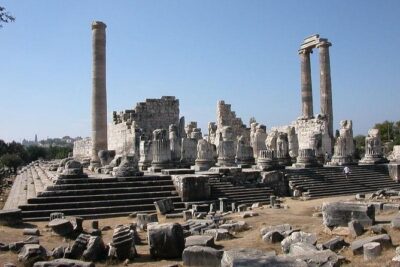
Priene, Miletus, and Didyma Day Tour from Kusadasi
Read our review →
Private Full-Day Ephesus Tour with Miletus and Didyma for Cruise Guests
Read our review →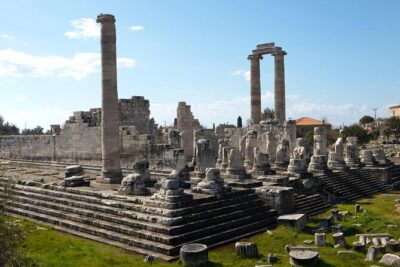
Priene Miletos Didyma (Pmd) Tour From Kusadasi Port / Hotels
Read our review →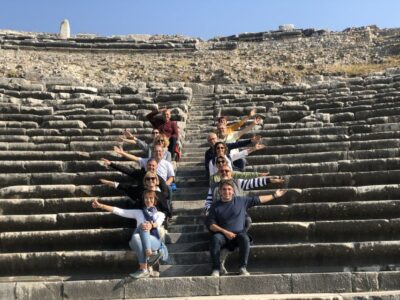
Browse the lists this tour appears in