Reviewed · PRIVATE
Tailor-Made Private Ephesus Tour with Local Experiences
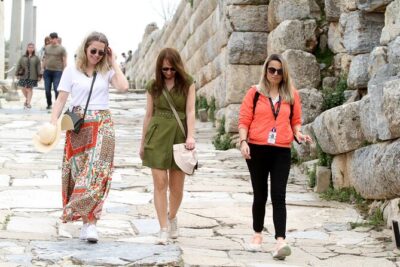
A private Ephesus day in Kusadasi is interesting because it is not just a stamp-collector route. You get a licensed English guide, a comfortable A/C Mercedes van with a driver, and a pace that can flex to what you care about most. This tour is built for people who want big names like Celsus and the Great Theatre, plus the quieter spiritual stops around Ayasuluk Hill.
I especially like the custom-feeling setup. Even with set highlights, the day is guided, not rushed, and your guide is checking your pace and preferences as you go. I also like the practical value: pickup and drop-off for cruise guests, guaranteed skip-the-line tickets, and a delicious local lunch are included in the base price.
One thing to consider: the main attractions have extra admission fees on top of the $75 per person tour price. So you will want to budget for entry tickets like Ephesus Ancient City, the Virgin Mary House, Terrace Houses, and the St John Basilica if you plan to see everything.
Key takeaways before you go
- Private pace with a licensed English guide, so you can slow down for photos or ask real questions
- Skip-the-line tickets arranged ahead of time, which helps when you are arriving during peak hours
- Bulbul Mountain views at the House of the Virgin Mary, worth the climb and the quiet atmosphere
- A smart mix of Roman ruins and Christian sites, from Celsus and the Theatre to St John Basilica
- Comfort + convenience with cruise port pickup and a new A/C Mercedes Vito
Why this private Ephesus day feels better than a bus tour
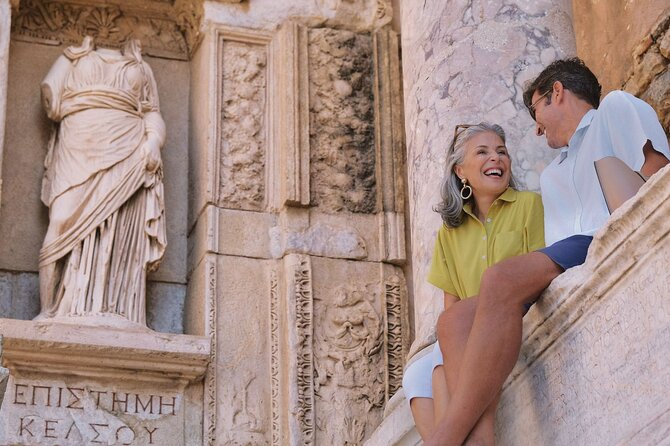
Ephesus can overwhelm you fast. There are huge ruins, long walking stretches, and lots of signs that all start to look similar. What makes this experience work is that you are traveling with your own guide and driver, not squeezed into a large group schedule.
From the start, you are not dealing with guesswork. Cruise passengers meet the team at the exit gate of the immigration terminal at Kusadasi Cruise Port, holding an OTTI Travel sign. If you are staying in town, pickup happens at your hotel reception. Either way, the goal is simple: you get to the sites with less stress, and you spend more energy looking around.
This private setup also explains why so many people rated the guides highly. In the best versions of this tour, your guide is reading the room. Some guides you might meet include names like Gökçe, Tas, Nagi, Selin, Asli, and Ahmet, and the common thread is the same: prompt communication, careful timing, and real answers when you ask why something was built the way it was.
More ways to see Ephesus:
- FOR CRUISERS: Skip The Lines PRIVATE EPHESUS TOUR &On Time Return
★ 5.0 · 8,527 reviews - Top Choice For Cruisers: Ephesus, Mary’s House WITH TICKETS+LUNCH
★ 5.0 · 7,233 reviews - PRIVATE EPHESUS TOUR FOR CRUISERS: On-time Return and Skip-Line
★ 5.0 · 5,807 reviews
Pickup, timing, and how long you actually need
The tour runs about 6 to 8 hours. That time window matters. Ephesus is big, and the Virgin Mary House sits up on Bulbul Mountain, so the day includes both downhill and uphill walking.
Also, note that this is a private tour, meaning only your group participates. That helps because it is easier to adjust to your pace, especially if someone in your party has hip issues or needs a bit more time near the entrances and stairs. In fact, one traveler described a moment where their guide arranged extra help so a family member would not have to walk back up a steep hill at the Virgin Mary site.
Finally, a quick planning tip: the tour is often booked about 63 days in advance. If you are traveling with a cruise schedule or you want a specific time slot, booking earlier gives you more options.
House of the Virgin Mary on Bulbul Mountain (plus entry planning)
Your day begins at the House of the Virgin Mary, tucked on the top of the Bulbul Mountain about 9 km ahead of Ephesus. The big draw here is not just the story, it is the atmosphere. You arrive to a quiet, green setting that feels removed from the noise of a modern city.
The house itself is described as Roman-style stonework. It is a small site, but it carries a layered religious history: a church was built there in the 4th century, and today you may also notice how the space has been shaped by different traditions over time.
Practical tip: plan on about 45 minutes. You will want that time to look closely at the stone architecture and take in the views, not just rush through. Entry is not included, and the ticket fee is listed separately, so bring cash or plan on paying directly per person.
Fitness note: the site involves walking up and down uneven ground. Since the tour asks for moderate physical fitness, wear grippy shoes. If mobility is limited, tell your guide early so they can guide your route and timing.
Entering the Ephesus Ancient City ruins without the time sink
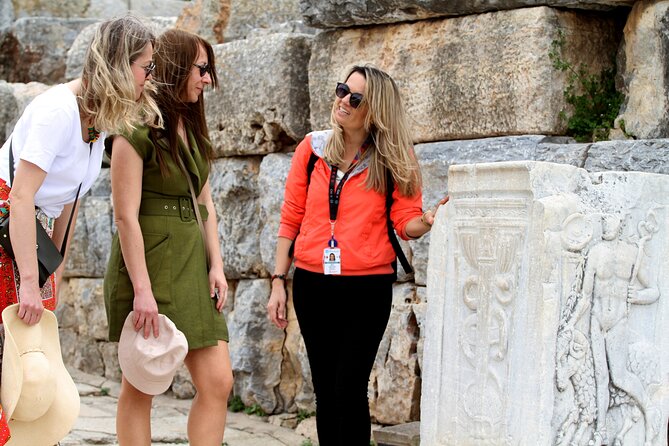
Next comes Ephesus Ancient City, the archaeological powerhouse on Turkey’s southwest coast. This is where your guide earns their keep, because the ruins only become easy to understand when someone ties them together.
Ephesus moved through many eras. You hear about the Greeks building the Artemesium in the 4th century BC, then later Ephesus becoming a major Roman city. When you are standing in the open air among columns and foundations, those time jumps stop being abstract and start feeling real.
Ephesus entry is not included in the base $75 price. The admission fee is listed separately, and it is worth it if you want the full experience.
One of the best advantages here is skip-the-line ticket handling. You still pay admission, but your tickets are arranged in a way that helps you avoid the worst waits.
A few more Kuşadası days worth comparing
- PRIVATE NO HIDDEN FEES Ephesus, Mary’s House Guided Tour /GRP OPT
★ 5.0 · 2,455 reviews - For Ship Guests:BEST SELLER EPHESUS PRIVATE TOUR & On Time Return
★ 5.0 · 2,029 reviews - Ephesus Temple of Artemis and House of Mary Private Half Day Tour
★ 5.0 · 1,573 reviews - PRIVATE TOUR FOR CRUISERS: Mary’s House (Meryemana) and Ephesus
★ 5.0 · 1,349 reviews
State Agora: where politics and daily life met
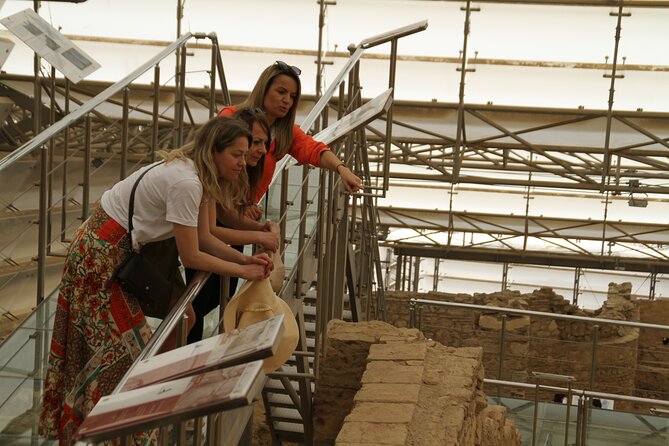
Your walk through Ephesus includes the State Agora, located in the southern part of the Basilica area. The big takeaway is that this was not a commercial market square in the way you might picture. It was used more for meetings and governmental discussions.
As you look around, your guide can point out details from excavations, including evidence of older use. This area even connects to the idea of an early necropolis, with graves and a stone-paved road uncovered during digs.
Time here is short, around 15 minutes, but it is a useful stop. It sets you up to see Ephesus as a living city, not only a monument collection.
The Odeion: a small theatre with big purpose
Then you head to the Odeion, a building that looks like a compact theatre shape with a stage building and seating area. Its role was double, which makes it more interesting than a one-purpose structure.
First, it served as a Bouleuterion for meetings, essentially a senate-style civic space. Second, it functioned like an odeum, holding performances and concerts.
It was built in the 2nd century AD, and the capacity is described as about 1,500 spectators. It is not the largest building you will see today, but it adds depth. Ephesus was not only about spectacle, it was also about decision-making and public life.
Hadrian’s Temple and Domitian’s Temple: power made visible
As you continue along Curetes Street, you will come to Temple of Hadrian, one of the best-preserved structures in that area. What you should notice is the facade: four Corinthian columns supporting a curved arch, with a relief of Tyche in the center.
Then you move to the Temple of Domitian, located at the south end of Domitian Street. This one sits on a high terrace with visible stairs and a pro-style plan. The description includes the temple’s column layout, the large U-shaped altar area, and the fact that it was connected to the special honor of building an Emperor Temple.
These emperor temples matter because they explain how Rome turned loyalty into architecture. When you see the stone remains with your guide’s context, you understand why people traveled, prayed, and performed civic identities in these spaces.
Entry is not included for these sites in the tour price, so treat them like included highlights with separate tickets.
Hercules Gate and Curetes Street: a city that slowed down
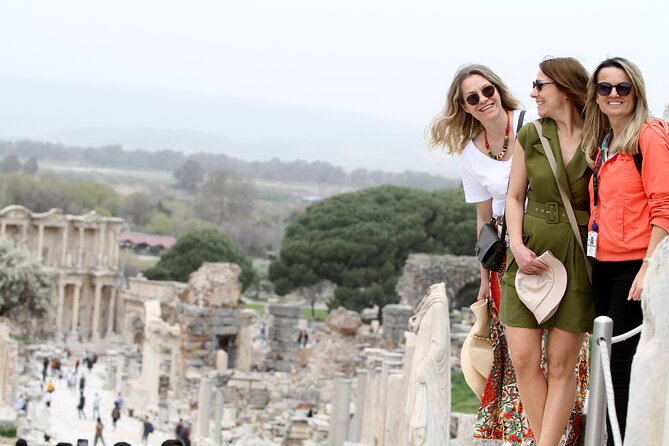
Near the end of Curetes Street sits the Hercules Gate. Even though only parts of the gate remain, it is still a strong visual marker. The gate was named for relief imagery of Hercules, and the relief dates back to the 2nd century AD, even if the gate material was moved later.
What I find useful here is the street context. The gate narrowed access to the main street, which suggests a shift toward pedestrian movement in later centuries. It is one of those stops where you do not need a long explanation, you just need to look at what is left and connect it to how the city likely functioned.
Terrace Houses: Roman family life, not just public monuments
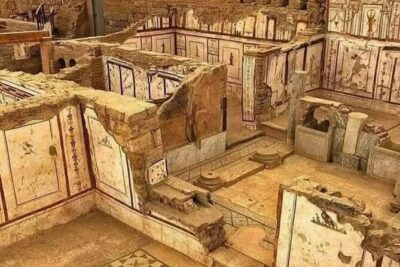
Across the way from Hadrian’s Temple are the Ephesus Terrace Houses, sometimes called the homes of wealthy Romans. This part of Ephesus is especially valuable if you want to understand daily life instead of only civic and religious power.
You will see that these homes were built in terraced layers, with mosaics and frescos consolidated under protective roofing. The museum-style access is described as opening up some houses to the public.
Time here is about 30 minutes, and entry is not included. If you only have the energy for one “extra ticket” site, Terrace Houses are often the one that most helps you picture how people lived in Ephesus.
Library of Celsus: the photo stop with real engineering behind it
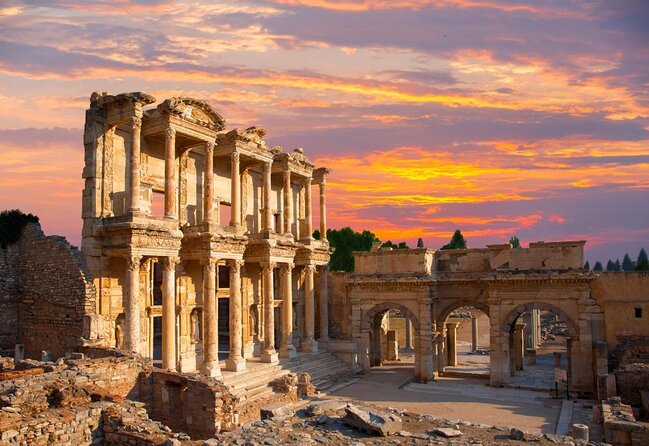
No Ephesus walk feels complete without the Library of Celsus. It is one of the most beautiful structures in the ancient city, built in 117 AD as a monumental tomb for a provincial governor.
Your guide can point out the clever details that make this place more than an impressive facade. The library was designed to protect scrolls, including double walls behind the bookcases to deal with temperature and humidity extremes. There is also mention that the collection capacity was more than 12,000 scrolls, which helps you grasp the scale of what Celsus’ family supported.
Time is usually around 15 minutes. This is short, so prioritize what you want to see: the facade from the right angle for photos, then the interior context if access is open.
Ephesus Great Theatre: the largest stage in Anatolia
Next is the Ephesus Ancient Greek Theatre, which is described as the most magnificent structure in the ancient city. It began in the Hellenistic period in the 3rd century BC, then got enlarged during the Roman period into its current style.
It is the largest theatre in Anatolia with about 25,000 seats. The seating is divided into horizontal sections, and the theatre was used for more than plays and concerts. The description includes religious, political, and philosophical discussions, plus gladiator and animal fights.
This is one of those places where standing in the open air changes your understanding. You can feel how the architecture pushed voices outward, how crowds gathered, and why public performance was a major part of civic identity.
Time is about 15 minutes. Even if you could spend longer, you can get a lot from the first few angles once your guide frames what you are seeing.
Basilica of St. John and the Ayasuluk connection
After the theatre, you head toward the Basilica of St. John on Ayosoluk Hill. The story here is that St John spent his last years in the region and was buried on the southern slope of the hill. Over time, a chapel was built, then later the church was changed into a basilica during the era of Emperor Justinian.
You may also hear the timeline of early Christian persecution and the tradition that John wrote parts of the New Testament in this region.
Time is around 30 minutes, and entry is not included. If Christianity history is part of what draws you to Ephesus, this stop gives the day a second meaning. It is not just ruins. It is a sacred geography.
Temple of Artemis and the reality of ruins
Then you visit the Temple of Artemis, one of the Seven Wonders of the ancient world. The key thing to know is that today you mainly see foundation ruins. The site became swampy over centuries, and only the impressive remains of the foundations are visible.
Still, it is worthwhile because it connects Ephesus to the wider ancient Mediterranean story. The description notes that the best surviving pieces are exhibited in the British Museum, which is a helpful breadcrumb if you like to connect what you see at home with what you will see later.
Artemis entry is listed as free.
Okuz Mehmet Pasa Kervansaray: Ottoman customs, now a stop
After the ancient focus, you get a calmer Ottoman-era moment at Okuz Mehmet Pasa Kervansaray. This caravanserai was commissioned by Öküz Mehmed Pasha and built between 1615 and 1618. It was designed like a fortress and used as a customs house.
The building is renovated in the mid-1900s, and it has a strong sense of solidity. Time is about 10 minutes, and entry is free. This stop works well as a break from long walks, especially after Ephesus and the hill sites.
Lunch and the Kusadasi Bazaar: your last stretch of the day
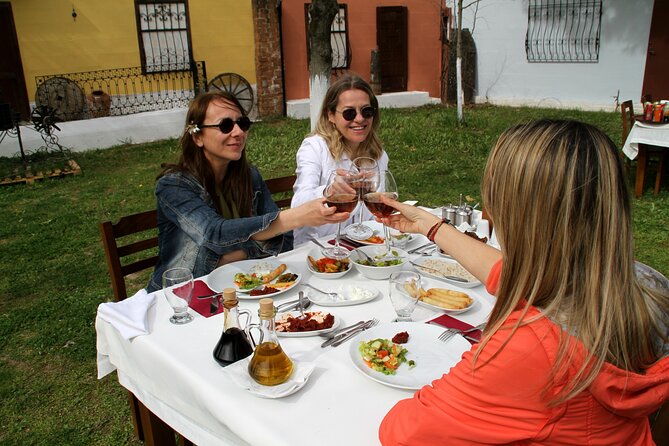
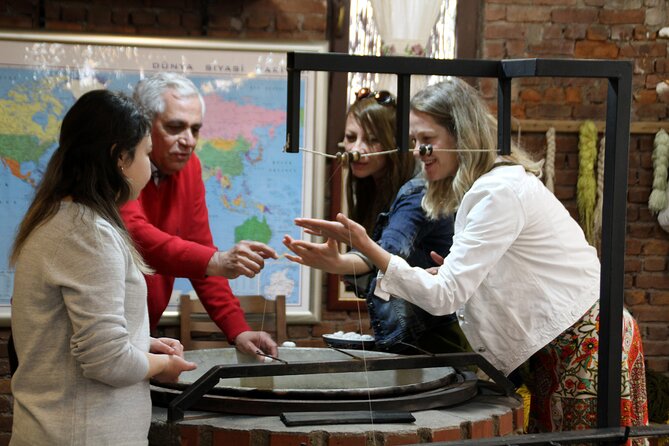
Lunch is included, and multiple accounts describe it as a local Turkish meal, sometimes at a restaurant connected with a carpet weaving school. In practice, that can mean you get a brief demonstration tied to textile making, and you might be shown how silk comes from mulberry leaf harvesting and silk cocoons. It is interesting and hands-on.
Just keep your expectations clear: some stops connected to carpet production can include sales time. If you do not want to shop, you can tell your guide. One traveler specifically said they preferred not to go to a rug store, and the guide still offered a stop connected to weaving education, not hard selling.
Finally, you end with free time in the Kusadasi Bazaar, about 1 hour. Expect Turkish goods, leather items, sweets, and lots of small shops. This is not a curated market. It is real commercial Kusadasi, so it is best for wandering, browsing, and grabbing snacks if you still have energy.
Value check: what your $75 includes, and what you still pay
Let’s be honest about value. The base price is $75 per person, and it includes:
- a professional licensed English-speaking guide
- pickup and drop-off for cruise guests
- guaranteed skip-the-line tickets
- a brand new A/C Mercedes Vito and private driver
- local lunch
The big add-ons are entry fees. The tour lists these separately:
- Ephesus Ancient City admission (listed at €40 per person)
- House of the Virgin Mary admission (listed at €18)
- Terrace Houses admission (listed at €15)
- St John Basilica admission (listed at €6)
Temple of Artemis and the caravanserai are listed as free, and the bazaar is free to enter.
So the math is simple: the base covers the people, transport, coordination, and meals. You pay for the historical sites themselves. If you are the type who wants to see the full set of highlights, the total cost will rise quickly. If you are selective and want only the core Ephesus ruins plus a couple of extras, you can plan your budget more comfortably.
Best fit: who should book this private Ephesus tour
I think this tour is a great fit if you:
- want private pacing instead of following a large group
- care about explanation, not only photos
- are visiting from Kusadasi on a cruise and want pickup that is actually timed to your arrival
- prefer a mix of Roman monuments and Christian sites
It might be less ideal if:
- you dislike paying separate admission fees for multiple sites
- your group has very limited walking ability, since several stops involve stairs, hills, and uneven surfaces even when you can take your time
Should you book this private Ephesus tour?
If your goal is one well-run day that connects the big ruins with the personal, religious, and everyday angles of Ephesus, then yes, I would book it. The combination of a licensed English guide, private transport, and skip-the-line ticket handling makes the day feel smoother than the typical “get on and get off” excursion.
Before you confirm, do two things. First, decide if you want Terrace Houses and St John Basilica, since they add separate admissions. Second, tell your guide what you care about most, because the whole point of a private day is that you can steer it. If you do that, you get the best version of this experience, a day that stays respectful of time, energy, and what you want to see.
FAQ
Where do cruise passengers meet for pickup?
Cruise passengers are met at the exit gate of the immigration terminal at the Kusadasi Cruise Port, with a board showing the OTTI Travel sign.
Is pickup and drop-off included?
Yes. Pickup and drop-off are included for cruise guests, and pickup from Kusadasi hotels is arranged by meeting at the hotel reception.
How long is the tour?
The tour lasts about 6 to 8 hours.
What language is the tour guide?
The tour is offered in English with a professional licensed English-speaking tour guide.
Is the $75 price enough to cover entrance fees?
No. The base price includes the tour services, but admission fees are listed as not included for Ephesus Ancient City, the Virgin Mary House, Terrace Houses, and the St John Basilica.
Are skip-the-line tickets included?
Yes. The tour includes guaranteed skip-the-line tickets.
How much time do you get at the bazaar?
You get about 1 hour of free time in the Kusadasi Bazaar.
What if I need to cancel?
You can cancel for a full refund up to 24 hours before the experience start time. If you cancel less than 24 hours before, the amount paid is not refunded.
Recently added around Kuşadası
- Ephesus Shore Excursions For Cruisers★ 5.0 · 3 reviews
- Private Village Life Sirince Trip★ 4.5 · 11 reviews
- The Best of Ephesus Tour For Cruisers★ 4.0 · 3 reviews
- Skip Lines: Ephesus PRIVATE TOUR For Cruise Guests★ 5.0 · 11 reviews
- Small Group Ephesus Shore Excursion from Kusadasi Port★ 5.0 · 4 reviews
- Traditional Turkish Bath in Kusadasi★ 4.0 · 5 reviews
- Best of Ephesus Tour from Kusadasi Port★ 5.0 · 4 reviews
- Small Group Ephesus & Sirince Village Tour From Kusadasi / Selcuk Hotels★ 5.0 · 5 reviews
Private, compared.
For Cruisers: Skip The Lines Private Ephesus Tour & On Time Return
Read our review →
Private Ephesus Tour For Cruisers: On-time Return and Skip-Line
Read our review →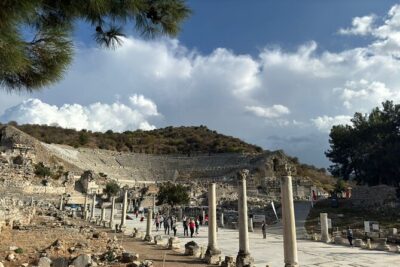
Private NO Hidden Fees Ephesus, Mary’s House Guided Tour /Grp Opt
Read our review →
For Ship Guests: Best Seller Ephesus Private Tour & On Time Return
Read our review →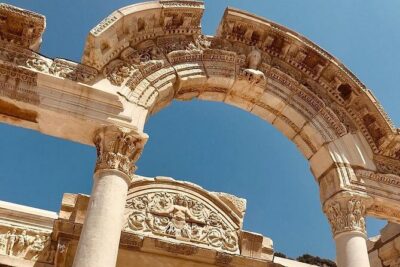
Ephesus Temple of Artemis and House of Mary Private Half Day Tour
Read our review →Private Tour For Cruisers: Mary’s House (Meryemana) and Ephesus
Read our review →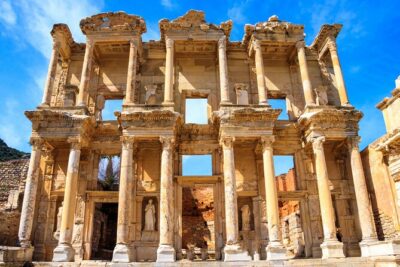
Skip-The-Line: Group & Private Ephesus Tour Entry Fee & Lunch
Read our review →