
Reviewed · PRIENE, MILETUS & DIDYMA TOURS
Priene, Miletus, and Didyma Day Tour from Kusadasi
If you have already done Ephesus, this is a smart way to keep your Ionian Greece fix going without repeating the same crowds. What makes this day tour interesting is the way it links three major sites, Priene, Miletus, and Didyma, into one clear story about Greek cities, power, and prophecy.
I especially like the small-group format. With a maximum of 14 people, you get time to ask questions and actually hear the guide, not just follow along. I also like that you start with pickup from your Kusadası or Selçuk-area hotel and finish back there, so you spend less time organizing and more time looking.
One drawback to consider: it is a full-day outing, about 8 hours, with several archaeological stops. You will be on your feet for a while, and the tour does not include drinks, so plan for that.
Quick hits before you go
- Three Ionian sites in one day: you see how Priene, Miletus, and Didyma connect through the sacred and political routes of the ancient world.
- Art historian guidance: the explanations make the buildings easier to picture, not just photograph.
- Didyma first, then Miletus, then Priene: you build from oracle ground to a port-city powerhouse to a hilltop city theater.
- Buffet lunch included: fewer logistical headaches, and you get a proper break in the middle of the day.
- Max 14 people in the minibus: enough room to move, small enough to feel personal.
- Entrance fees included: you can focus on the sites instead of paying as you go.
A Small-Group Ionian Day Trip Beyond Ephesus
This is the kind of day trip I like in Turkey: focused, not scattered. You are not bouncing around to random viewpoints. You are moving between three ancient places that matter for different reasons, then a guide ties them together so the ruins make sense.
Priene gives you the sense of a designed Greek city, compact and elegant, with a theater that still feels built for real sound. Miletus shows you how an Ionian city operated as a hub, sending ideas and ships outward. Didyma is the “prophecy” stop, where the Temple of Apollo and the sacred pilgrimage path explain why people traveled and waited for answers.
And because this is a small-group minibus tour, you are not stuck with the long bus lines and mass pacing you sometimes get on the big circuits.
More of the Priene, Miletus and Didyma circuit:
- Ephesus, Priene, Miletos and Didyma Tour
★ 4.9 · 21 reviews - Priene Miletos Didyma Tour From Kusadasi / Selcuk Hotels
★ 5.0 · 15 reviews - NO HIDDEN FEES : Private Ephesus – Miletus – Didyma
★ 5.0 · 13 reviews
Price and what you really get for around $216
At $216.74 per person, you are paying for more than a ride. You get the minibus transport, hotel pickup and drop-off, a professional art historian guide, a buffet lunch, and entrance fees included in the tour cost. That bundle matters because the sites are not just walk-by ruins. You are paying to enter, and you are losing time if you have to arrange tickets separately.
If you were to do this on your own, you would likely spend extra on transportation, likely end up paying for multiple admissions, and still need someone to explain the “why” behind what you are seeing. Here, the guide does that work for you, which is where value shows up.
One small practical catch: drinks are not included. Lunch is included, but water, soda, or other extras are on you. I’d treat that as part of your budget.
How the day runs from pickup to drop-off
Your day starts with pickup from hotels around Kusadası or Selçuk, plus the port area in Kusadası. The start time is 9:00 am, and the full tour runs about 8 hours. It’s structured enough that you will feel like you actually visited three cities, but not so rushed that you miss the bigger features.
The pacing also helps you absorb the sites. Didyma sets the tone with religious architecture and oracle mythology. Then you move to Miletus, where the story turns more political and economic. Finally, Priene brings it back to city life and performance, including that standout theater.
By the end, you go back to your hotel. For day trips in this region, that door-to-door piece is a big comfort.
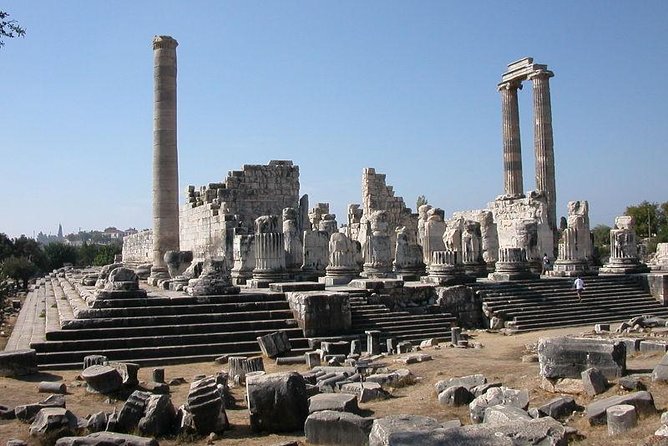
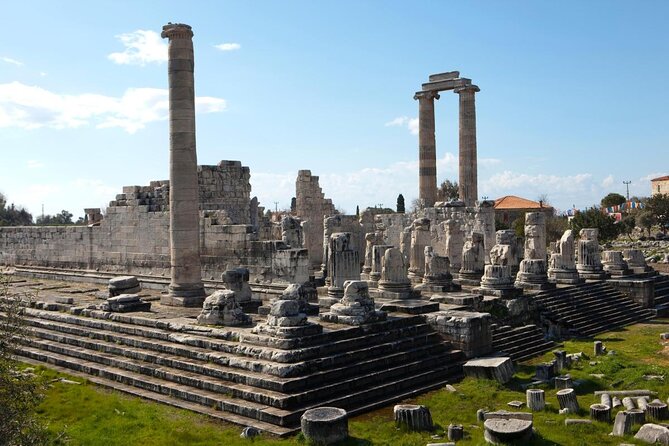
Didyma Temple of Apollo, oracle ground, and the medusa detail
Didyma is famous across the ancient Mediterranean for Apollo’s oracle. What I like about it is that it is not just one temple you look at and move on. It feels like a pilgrimage destination, even now.
The site is connected to Miletus by what’s known as the Sacred Way, a route pilgrims used when they traveled to ask serious questions. So when you stand in the ruins, you are not only looking at stone. You are imagining the line of people who came here to wait for answers.
Today, you explore the ruined Temple of Apollo and surrounding Greco-Roman structures. One detail you may not expect until you see it is the stone medusa’s head. It’s the kind of artifact that makes the site feel less like an empty field and more like a lived-in, guarded place.
You also get the layered timeline. The original temple is tied to late 8th century BCE Greek building, while today’s visible remains reflect later construction phases. That means the ruins give you a sense of continuity, not a single frozen moment.
It’s a slower, more atmospheric stop. You get the most payoff if you take a few minutes to look around before focusing only on the main temple area.
A different kind of day from the same port:
- FOR CRUISERS: Skip The Lines PRIVATE EPHESUS TOUR &On Time Return
★ 5.0 · 8,527 reviews - Top Choice For Cruisers: Ephesus, Mary’s House WITH TICKETS+LUNCH
★ 5.0 · 7,233 reviews - PRIVATE EPHESUS TOUR FOR CRUISERS: On-time Return and Skip-Line
★ 5.0 · 5,807 reviews - PRIVATE NO HIDDEN FEES Ephesus, Mary’s House Guided Tour /GRP OPT
★ 5.0 · 2,455 reviews
Miletus Antik Kenti, Ionian power, port-city monuments, and early coins
Miletus sits high and inland today, but in ancient times it commanded a large port tied to the Maeander River system. This is a city of movement: ships heading out, goods coming in, ideas traveling with traders.
Miletus was part of the Ionian Confederation, which helped shape the wider ancient Greek world. The site connects you to that broader power network, not just local street life. You also learn that Miletus competed with other big regional players, including Ephesus, and still managed to become a major center.
One of the most interesting educational angles here is the mention of early Greek coins minted in Miletus. It’s a small detail, but it helps you understand how cities built influence beyond monuments. Coins are how power shows up in daily life.
Within the ancient area, you may see highlights such as the theater and other landmarks associated with the city’s long life. The city also has layered identities, including Byzantine-era fortress elements and later structures you’ll encounter as part of the complex archaeological record. That mix makes Miletus feel like a place that kept being reused.
This stop is where the day starts feeling more “historical machine,” because the guide’s role is especially valuable. With clear explanations, you can tell what you are looking at and why it mattered.
Priene Antik Kenti, hilltop Athena, a theater that still sounds right
Priene is smaller than the more famous names, and that’s part of its appeal. You get a calmer experience, with a city layout that helps you picture daily life.
The centerpiece is the temple of Athena up on the hill. When you look upward at the ruins, you understand how Greek city design often made religious buildings visible and important. The temple area tells you this was a city where belief and civic identity overlapped.
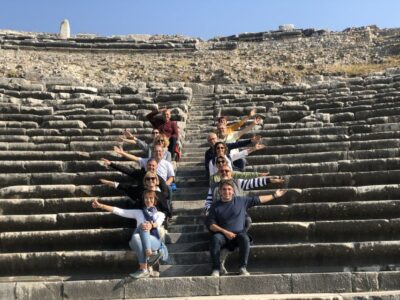
Then comes the part many people remember most, the theater. It was built in the Hellenistic era and can hold a huge crowd, about 6,500 people. A standout feature is the front-row “king chairs,” which is an unusual detail that makes the seating plan feel intentional and symbolic.
You might also hear that the acoustics are especially strong. That makes sense if you think about why theaters mattered: this was entertainment, but also public communication. Even if you cannot “test” the sound, you can feel the design logic.
Priene also has a strong sense of prosperity. You learn that in its period of wealth, many residents had advanced indoor facilities, including bathrooms with toilets, a sign of comfort that was not typical everywhere at the time. That kind of detail shifts your mental image from “ruins” to “real people.”
If you’re the type who loves city planning and performance architecture, Priene is the stop that keeps surprising you even after you’ve seen a few other theaters on your trip.
Lunch, timing, and what to expect on your feet
The tour includes a buffet lunch, and that is a genuine advantage on an 8-hour day. You avoid hunting for a meal, and you reduce the risk of running behind schedule.
Just plan for drinks being extra. The information is clear that lunch is included, but drinks are not. I usually bring a bit of cash for water or a soda during longer days like this.
As for effort level, it’s a typical archaeological day. You are walking between stops, and you will spend time standing on uneven ground. If you have knee issues, go slowly and choose your footing carefully. Good shoes matter more than you think.
Guide quality and why the names you hear matter
The best thing about this tour is how much the guide influences your experience. This is led by a professional art historian, and the difference shows up fast. You are not only told what the ruins look like, you are told what they were for and how different pieces fit together.
In particular, guides like Gul and Mehmet have been singled out for their knowledge and warmth. Another name you might hear is Melike, described as both professional and friendly. When a guide can explain Apollo’s oracle function in plain terms, or connect Miletus coins to everyday life, suddenly the ruins become understandable instead of just impressive shapes.
With a group size capped at 14, it is easier for the guide to keep things flowing and handle questions without turning the day into chaos.
Entrance fees and the little practical details that save your day
Entrance fees are included in the tour package, which helps you avoid the “pay here, pay there” annoyance. That also means you are more likely to see what the tour intends to show, instead of cutting corners because tickets are missing.
You’ll also receive a mobile ticket, which is convenient. And the tour is offered in English, so you can follow explanations closely without guessing.
One last practical note: confirmation is received within 48 hours of booking if space is available. I recommend checking that message carefully so your start time and pickup details match your expectations.
Who this tour suits best
This day trip is a strong fit if you:
- have already seen Ephesus and want more Ionian Greek sites without repeating the same city
- like guided context, where a guide helps you connect ruins to real stories
- prefer small groups over big buses
- want a full-day plan with lunch and admissions handled
It may be less ideal if you:
- dislike long days with multiple archaeological stops
- need lots of downtime between sites
- want drinks included without budgeting for them
Should you book this Priene, Miletus, Didyma tour?
Yes, if you want a focused Ionian day with a guide who explains what you are seeing, and you value a small group plus the comfort of pickup and drop-off. The best part of this tour is that it gives you more than “three ruins,” it gives you a connected picture of how cities, sanctuaries, and power worked across the ancient Aegean.
If you are coming with limited time in the Kusadası area, this is also one of the most efficient ways to see three major sites in a single day. Just go in with comfortable shoes, plan for drinks at lunch, and take your time at Didyma and Priene. Those two stops are where the day rewards patience.
FAQ
Is hotel pickup and drop-off included?
Yes. Pickup and drop-off are included, with pickup from hotels in the Selçuk or Kusadası-area and also from the port in Kusadası.
How long is the tour?
The tour lasts about 8 hours.
What meals are included?
A buffet lunch is included.
Are entrance fees included?
Yes. Entrance fees are included in the tour.
Are drinks included with lunch?
No. Drinks are not included.
What is the group size?
The tour has a maximum of 14 travelers.
Recently added around Kuşadası
- Ephesus Shore Excursions For Cruisers★ 5.0 · 3 reviews
- Private Village Life Sirince Trip★ 4.5 · 11 reviews
- The Best of Ephesus Tour For Cruisers★ 4.0 · 3 reviews
- Skip Lines: Ephesus PRIVATE TOUR For Cruise Guests★ 5.0 · 11 reviews
- Small Group Ephesus Shore Excursion from Kusadasi Port★ 5.0 · 4 reviews
- Traditional Turkish Bath in Kusadasi★ 4.0 · 5 reviews
- Small Group Ephesus & Sirince Village Tour From Kusadasi / Selcuk Hotels★ 5.0 · 5 reviews
- Best of Ephesus Tour from Kusadasi Port★ 5.0 · 4 reviews
Priene, Miletus & Didyma Tours, compared.
Priene Miletos Didyma Tour From Kusadasi / Selcuk Hotels
Read our review →
NO Hidden Fees : Private Ephesus – Miletus – Didyma
Read our review →
Kusadasi Shore Excursion: Private Full-Day Tour to Ephesus, Didyma and Miletus
Read our review →
Private Full-Day Ephesus Tour with Miletus and Didyma for Cruise Guests
Read our review →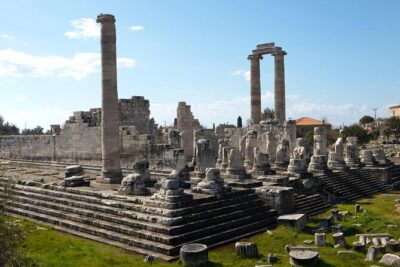
Priene Miletos Didyma (Pmd) Tour From Kusadasi Port / Hotels
Read our review →
Browse the lists this tour appears in